After a heat-related death of a horse in public, the Central Park Conservancy recently backed a plan to eliminate horse-drawn carriages from the world’s most famous public park. Regrettably, this was not an isolated incident. Earlier this year, for instance, a horse got loose and charged through the park, and another bolted, causing damage and injuries to bystanders. Animal advocates applauded the action, whereas some wanting the rides to continue argued that horse-carriages in the park were as Olmsted intended. Removing them would somehow rupture the historic integrity of what the Grand Park Maker intended.
They don’t know Olmsted. The original Greensward Plan that won Olmsted the position of Architect-in-Chief in Central Park did not include routes for horse-drawn carriages.
In the late 1850s, roads were only just getting smooth and reliable enough that people could go for carriage rides. Speeding along in comfort in your fancy new rig was just catching on as a pleasurable pastime. Those wealthy enough to afford to stable horses and purchase carriages were forming riding clubs and building private race tracks. Increasingly, they were calling for improved public roads.
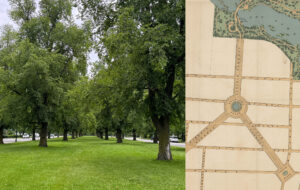
They key strength of the 1858 Greensward plan is how its designers kept the paths for pedestrians separate from those on horseback. Everything was intricately laid out and the two routes woven so they would never collide. The designers wanted the park to act as a peaceful, natural sanctuary from the high-paced world beyond its walls. Pedestrians needed to be able to wander at will without having to share the path with a horse. To allow for commercial traffic needing to cross through the park, two sunken roads were built, hidden in hedged trenches.
Olmsted and Vaux explained the separation of ways in their initial report: “It is very important to the comfort of pedestrians, that they should be able to proceed into the park… without having to cross over the circuit drive or bridle road, and that, when once fairly in among the trees and grass stretches, they should be able to ramble over the whole extent of the property with as much apparent freedom as if the whole park had been intended solely for their enjoyment.”
 Early on, though, someone with a lot of money looked at the plans and asked, “So, where are the horse and buggies going to go? Too many twists and turns in your paths. Keep things straight. We want to go fast.”
Olmsted and Vaux objected. Speeding carriages would utterly destroy the careful balance they were trying to create. The carriage enthusiast had friends wondering the same thing, though, and some were good friends of the park commissioners. Adding carriage routes through the park was a concession Olmsted and Vaux made when they realized they had no choice. It vastly complicated the park’s map. Weaving in a third route, meant they needed to increase the number of bridges significantly, and construction costs ballooned.
A few years after the designers conceded the point, Olmsted was riding in a horse-drawn carriage with his wife and their first newborn child. Something frightened the horse, and it bolted. The passengers were thrown. Wife and child were apparently fine. Olmsted shattered his leg and nearly died as a result from his wound. He would forever have a pronounced limp afterwards.
Worse, the baby died several days later. The cause was cholera, but the child’s loss was always linked with the carriage accident in the couple’s minds. The combined tragedies came at a time when he was already facing challenges managing the construction of Central Park, and I believe the events contributed to a depression that lasted several years and led to his decision to quit the park during the Civil War.
Obviously, the world has changed tremendously since Olmsted was alive. While bicycles existed, they didn’t really take off until after he retired. Same with automobiles, skateboards, rollerblades, and scooters. I often wonder what Olmsted would think about how his parks are used these days, but it seems obvious to me which side of the horse-drawn carriage debate he would be on these days. All his life, despite his injury, Olmsted depended on and cared for horses and livestock. As an expensive luxury few can afford, I think he would argue horse-drawn carriages are out of place in the preeminent public park.