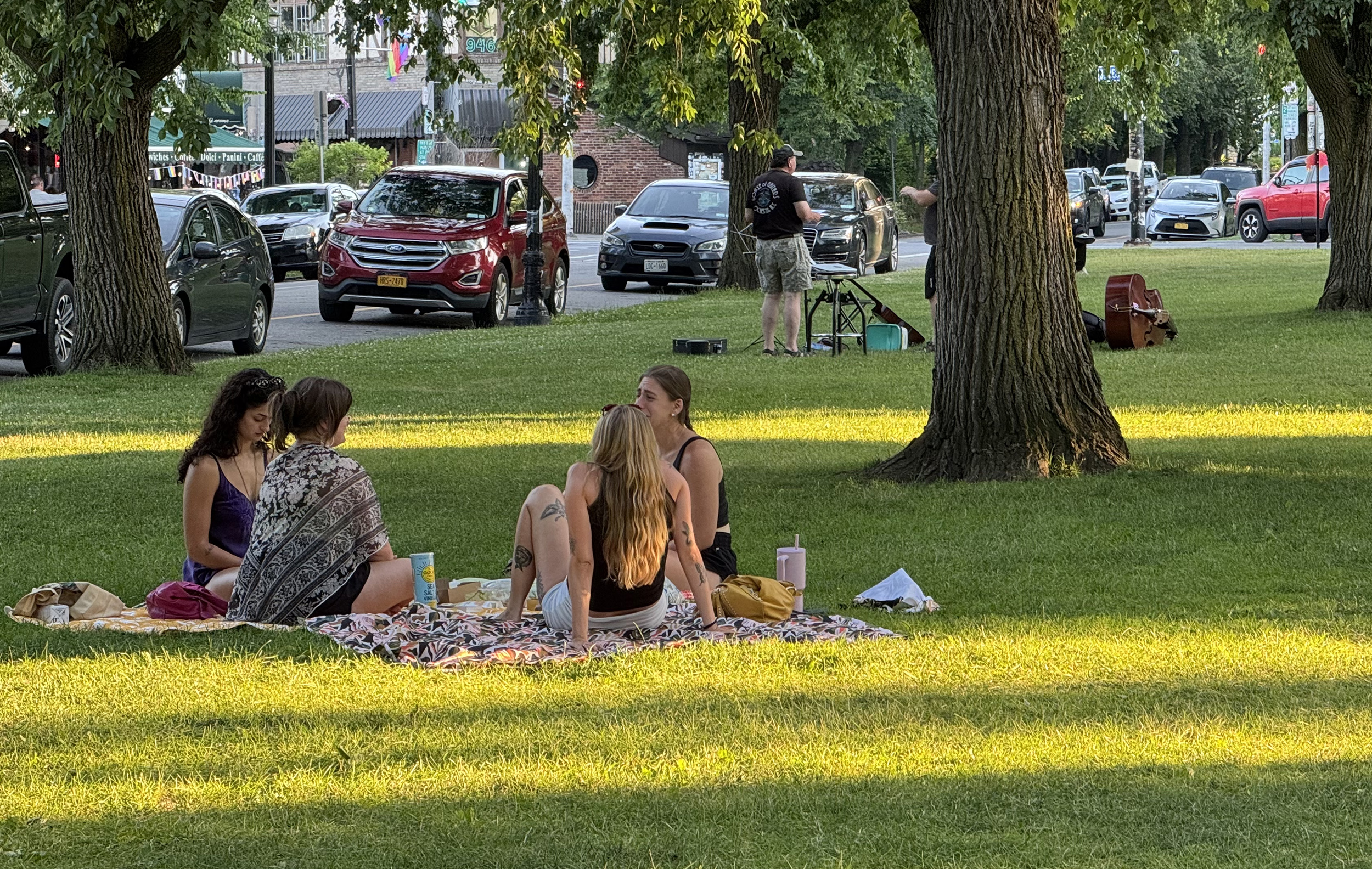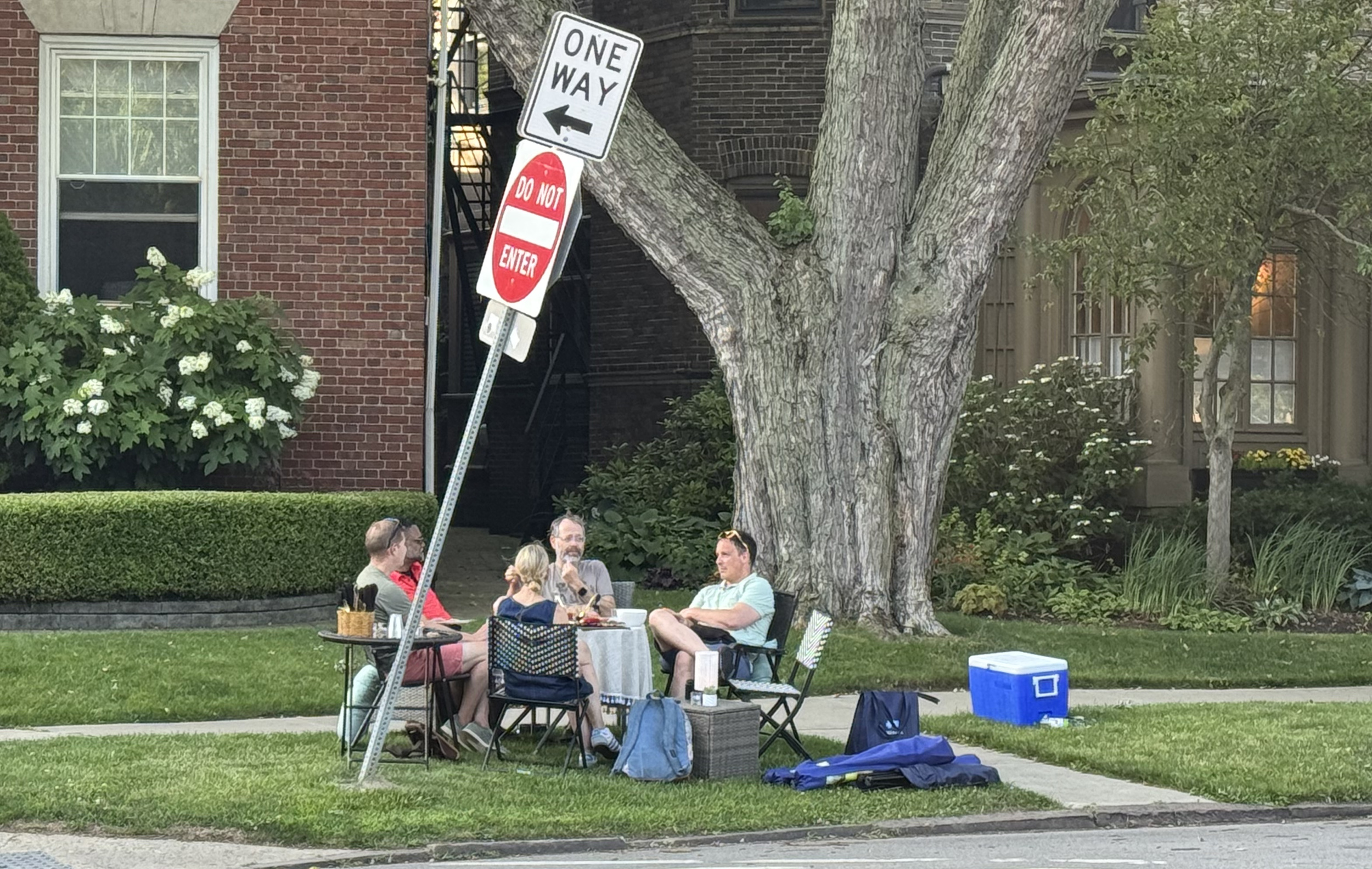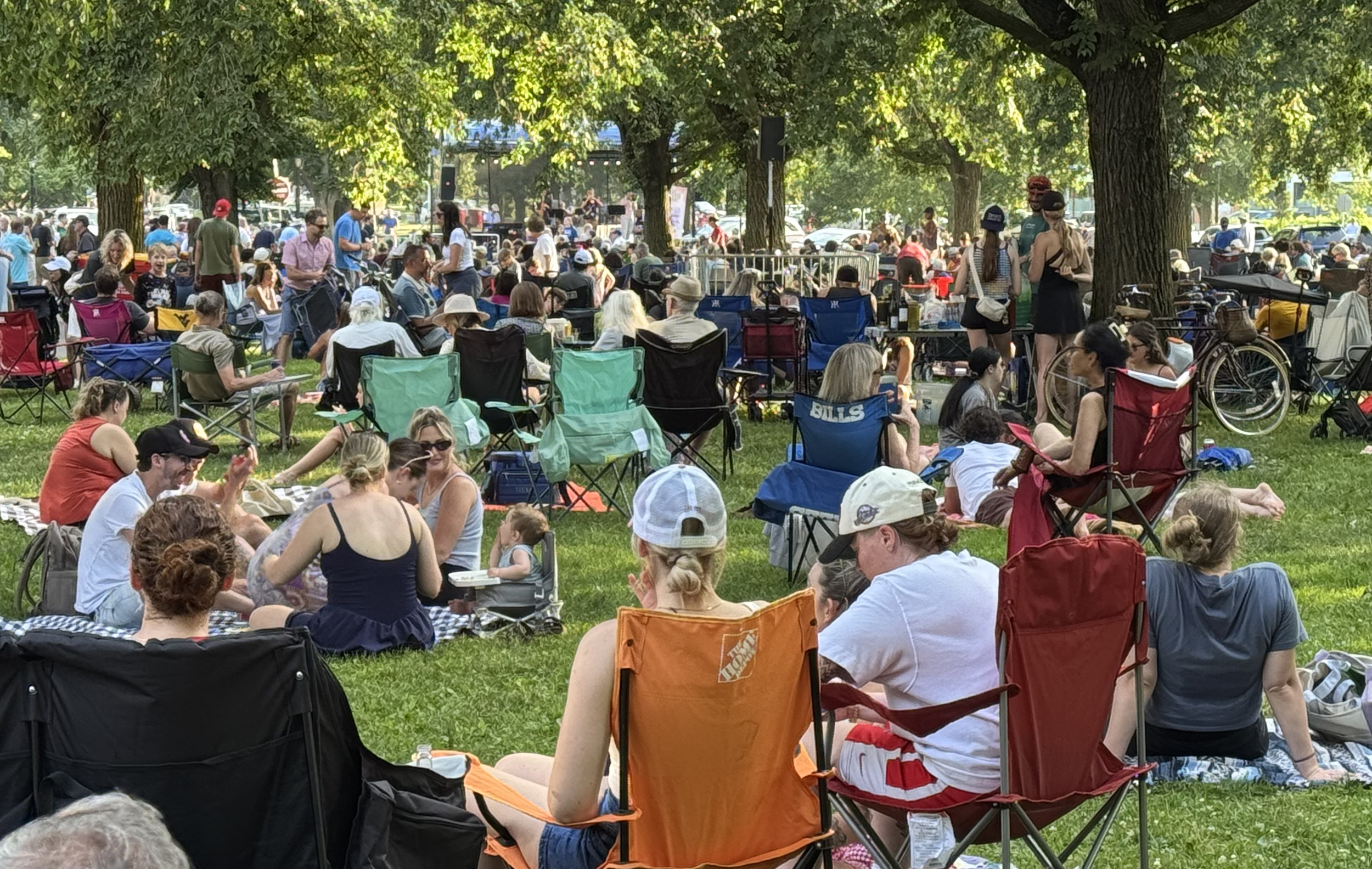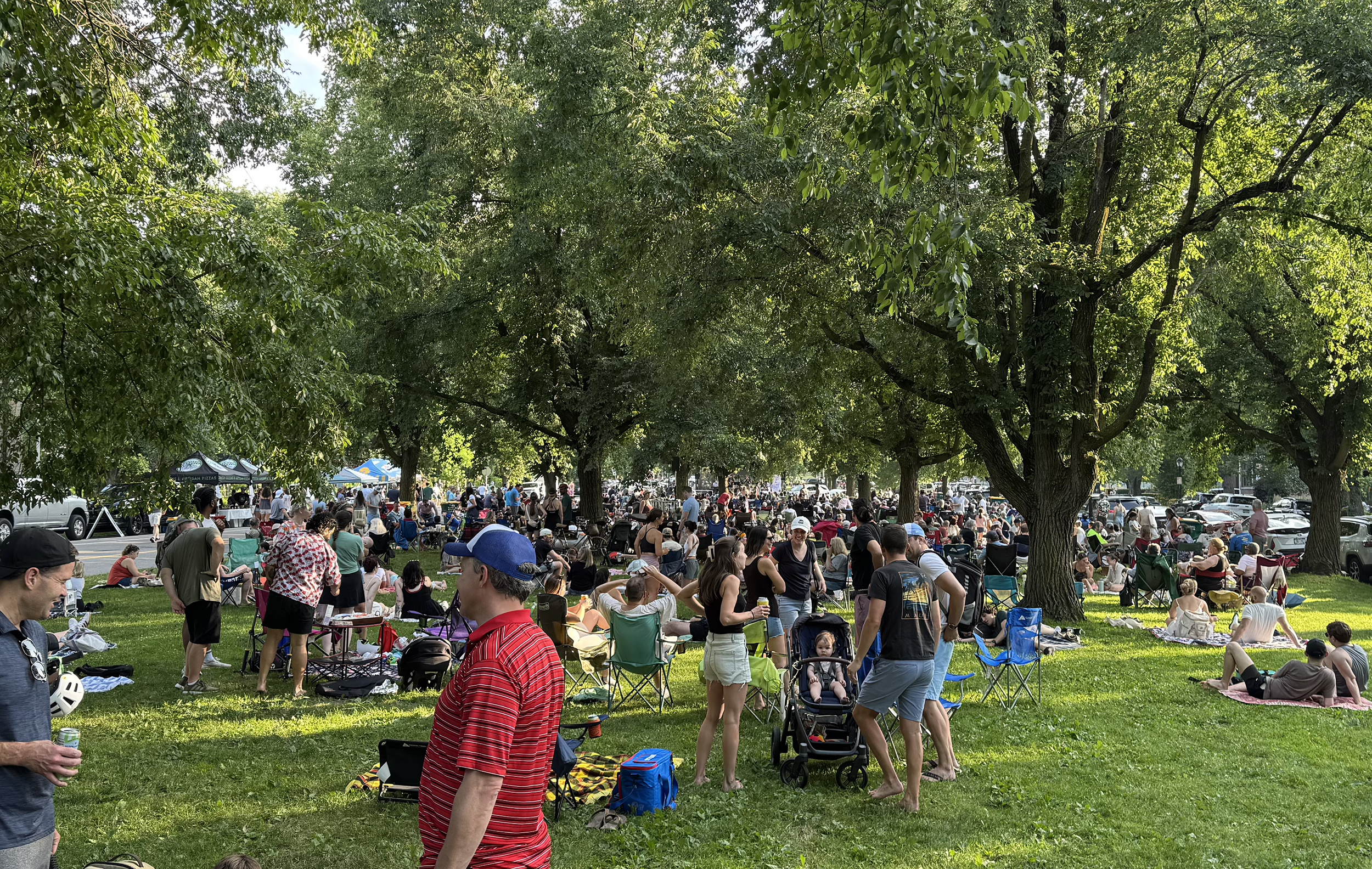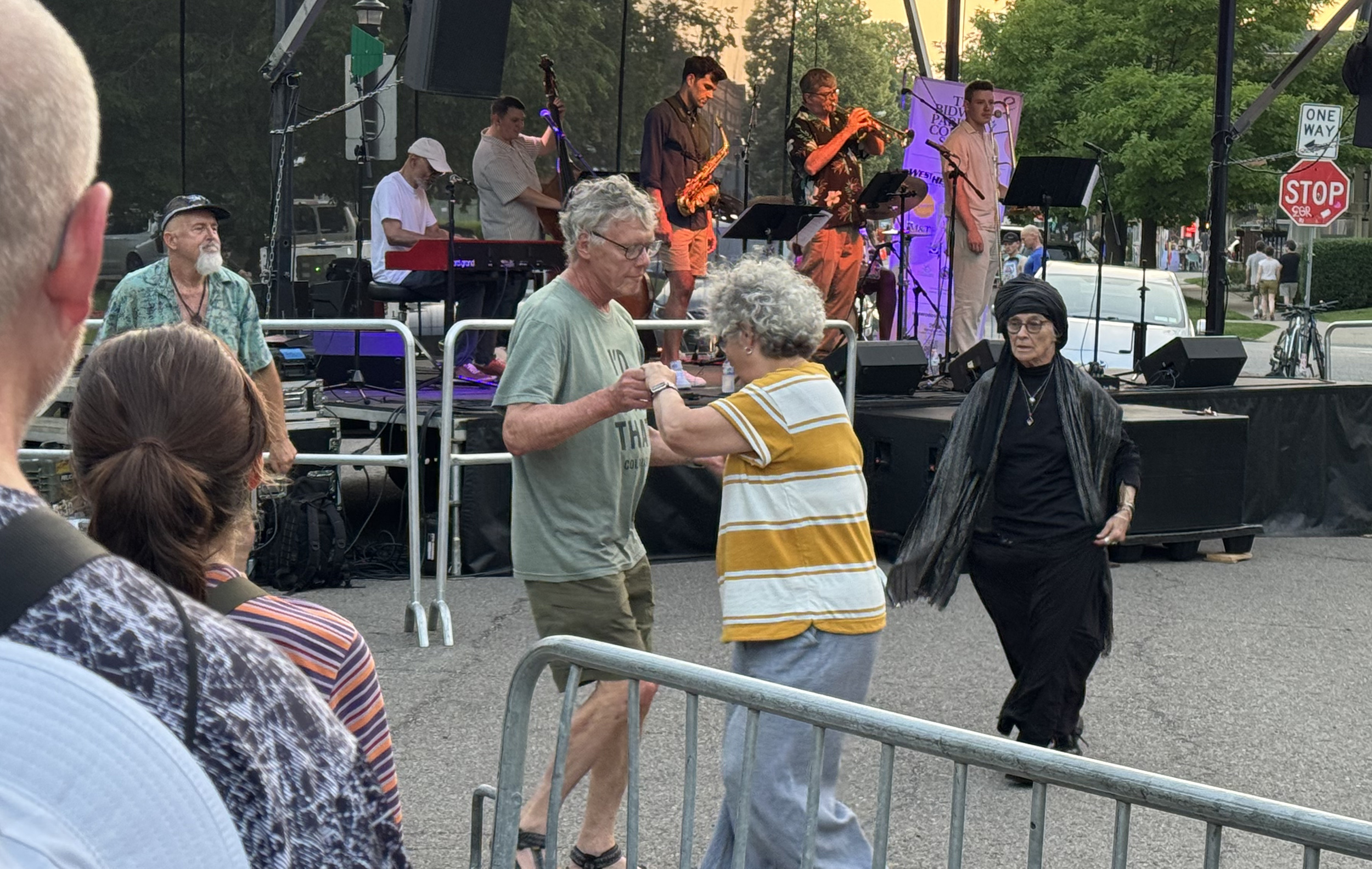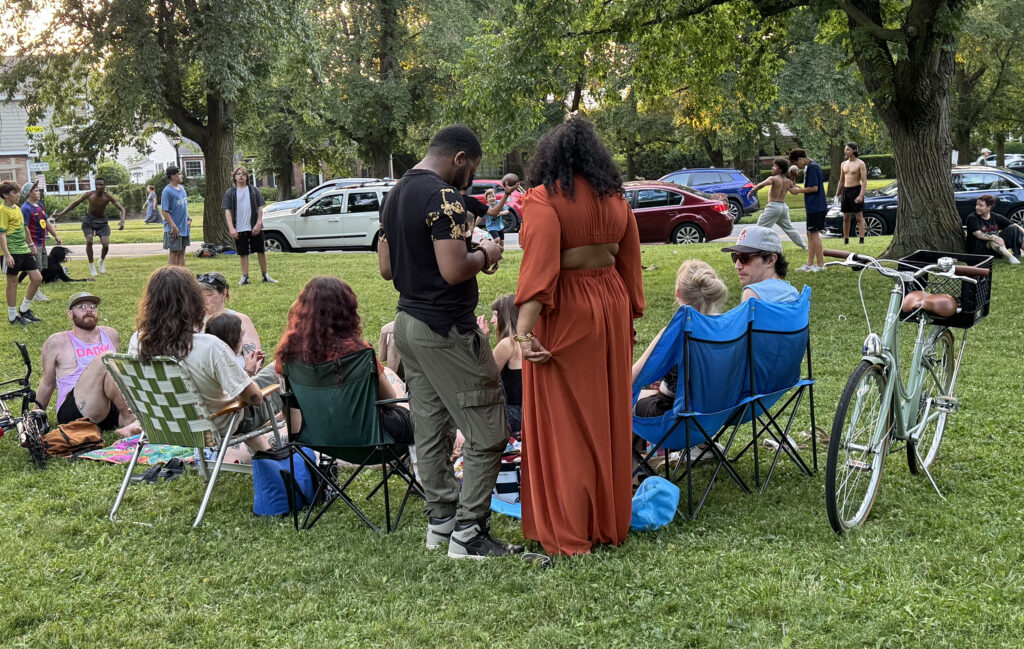
On a Tuesday night last June, in Buffalo’s Elmwood Village neighborhood, the community stepped outdoors and found a place for their lawn chairs and coolers on the parkway.
Out of no where, there were thousands celebrating an evening together. Parents let the kids run wild, held picnic dinners, and danced to a swinging jazz concert. The block party ran for blocks, spilling into the side streets. Food trucks were out, people were sipping wine and craft brews, and the air smelled sweet. Wednesday morning, there was no trace of the festivities under the trees and the week continued as usual.
Until I spent a week in Buffalo last month, I never really understood all the fuss about parkways. Now that I’ve walked along an authentic set in Buffalo, I see I’ve been wrong most of my life. Now I think there isn’t enough fuss made about them.
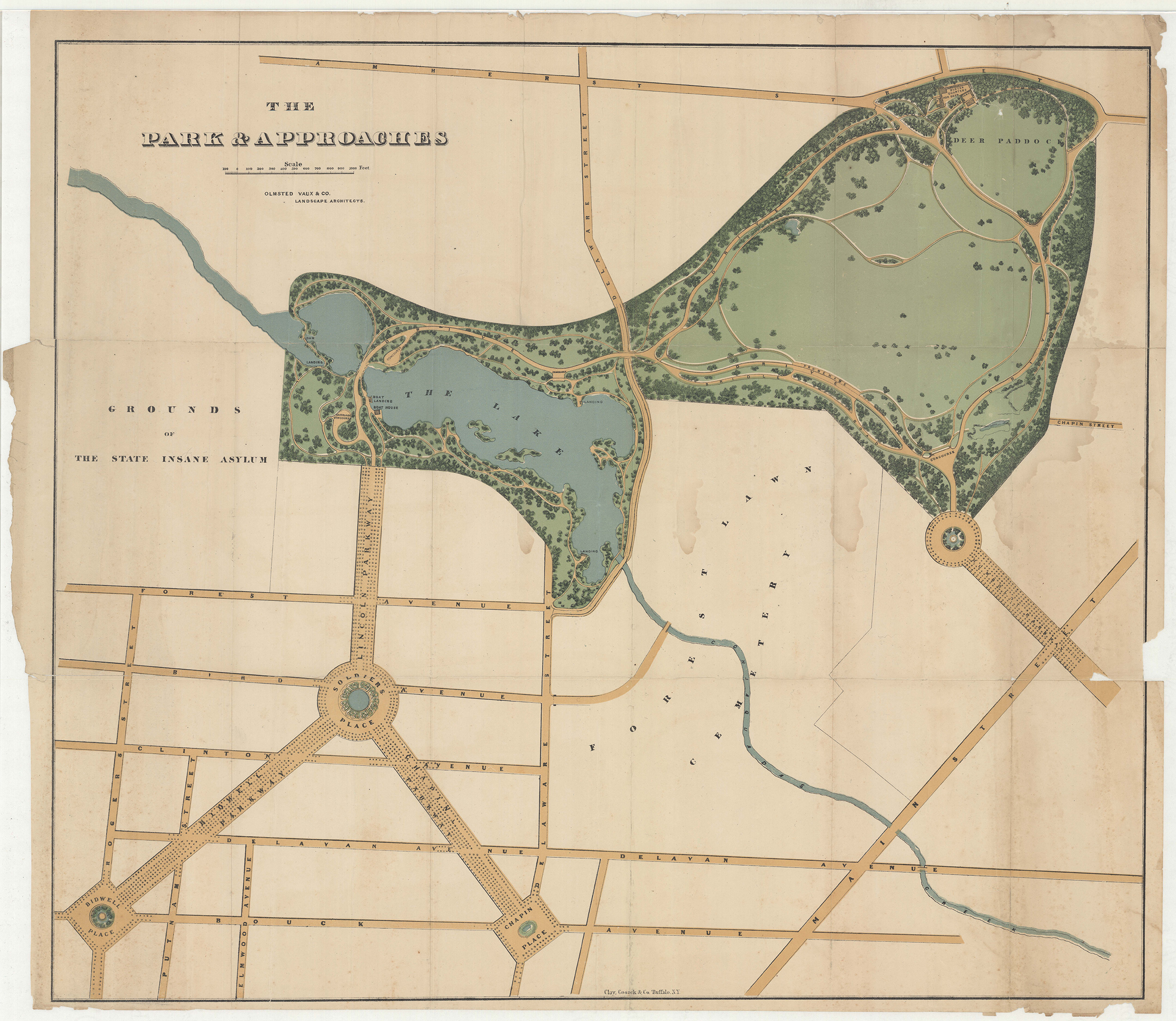
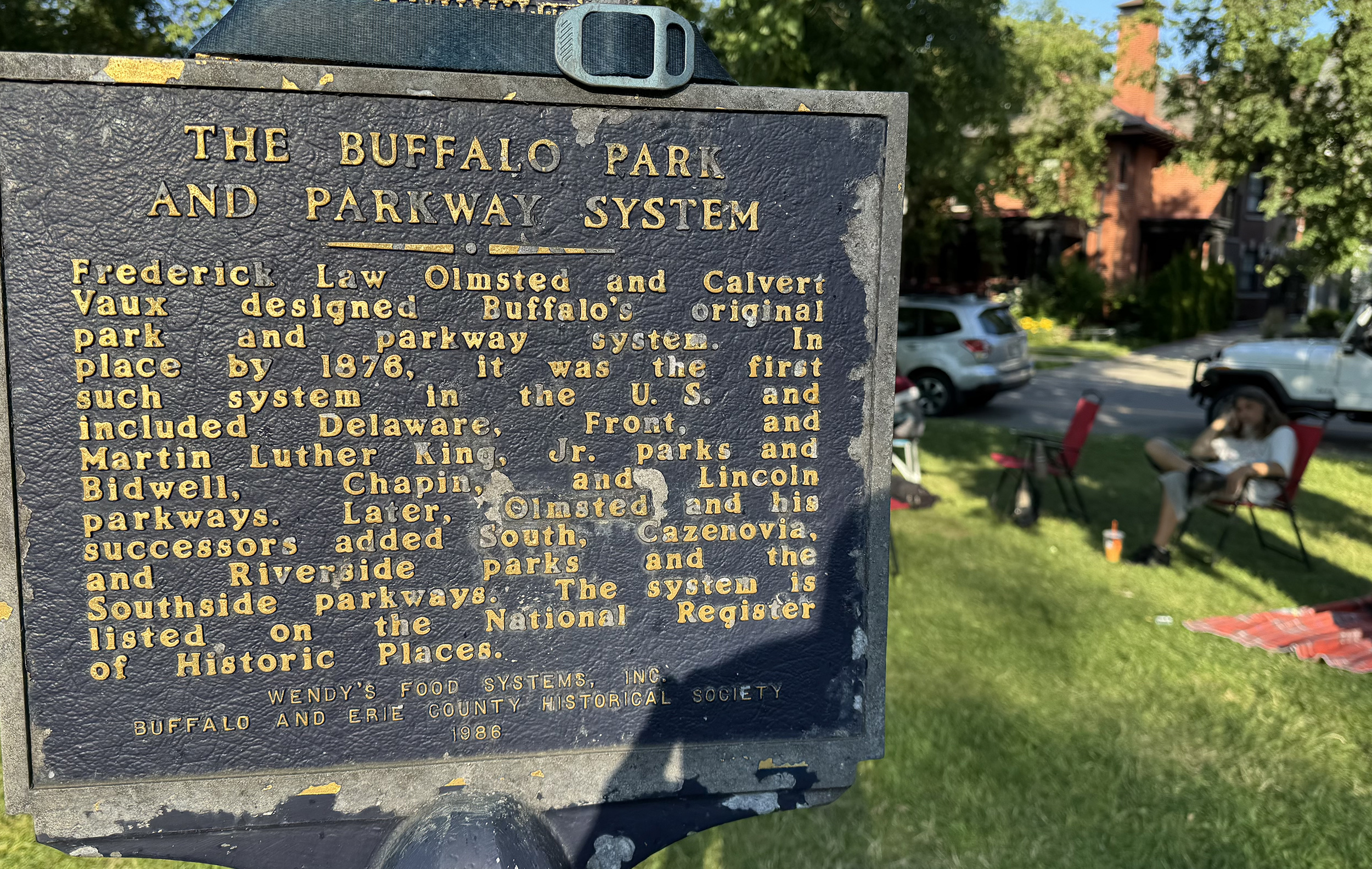
Before my visit to the city at the far end of the Erie Canal, I knew that Frederick Law Olmsted and Calvert Vaux co-invented the concept of these tree-lined paths connecting multiple parks throughout a city. I knew they were inspired by work done in the early 1860s in Paris to reconfigure its streets. Olmsted and Vaux’s first attempt to integrate the design concept was in Brooklyn, but it was perfected in Buffalo.
Still, living in the northeast and assuming I understood what parkways were, I took them for granted. It’s impossible to drive long distances in New England, New York, New Jersey, or Pennsylvania without taking a parkway—multiple lanes of traffic, each direction divided by a band of trees, grass, and rock. Sometimes, in housing developments from the 1920s and ‘30s, there are similar avenues bisected by a strip of trees, flowers, or bushes. I’ve always understood these to be different forms of a parkway.
Crossing the Eastern Parkway in Brooklyn often, I’ve experienced the designers’ first attempt to realize their vision. From the Grand Army Plaza and Prospect Park, the Eastern Parkway heads out towards the Atlantic coast. Olmsted and Vaux envisioned one day designing another park at the other end to link with, but that larger plan was never realized. The multi-lane roadway divided by trees is still there, but the foliage doesn’t seem to do much to slow speeds or offer any relief from being in a metropolis.
The glaring issue with all these faux parkways—especially highways and interstates—is that there’s really no “park” involved. The strip of greenery down the middle is a hazardous void. It’s a domain only ever visited by lawnmowers and police hiding in their speed traps. Engine trouble? Steer to the right and avoid the divide at all costs. If you happen to see a deer or other animal in this region between multiple lanes, you fear for its life.
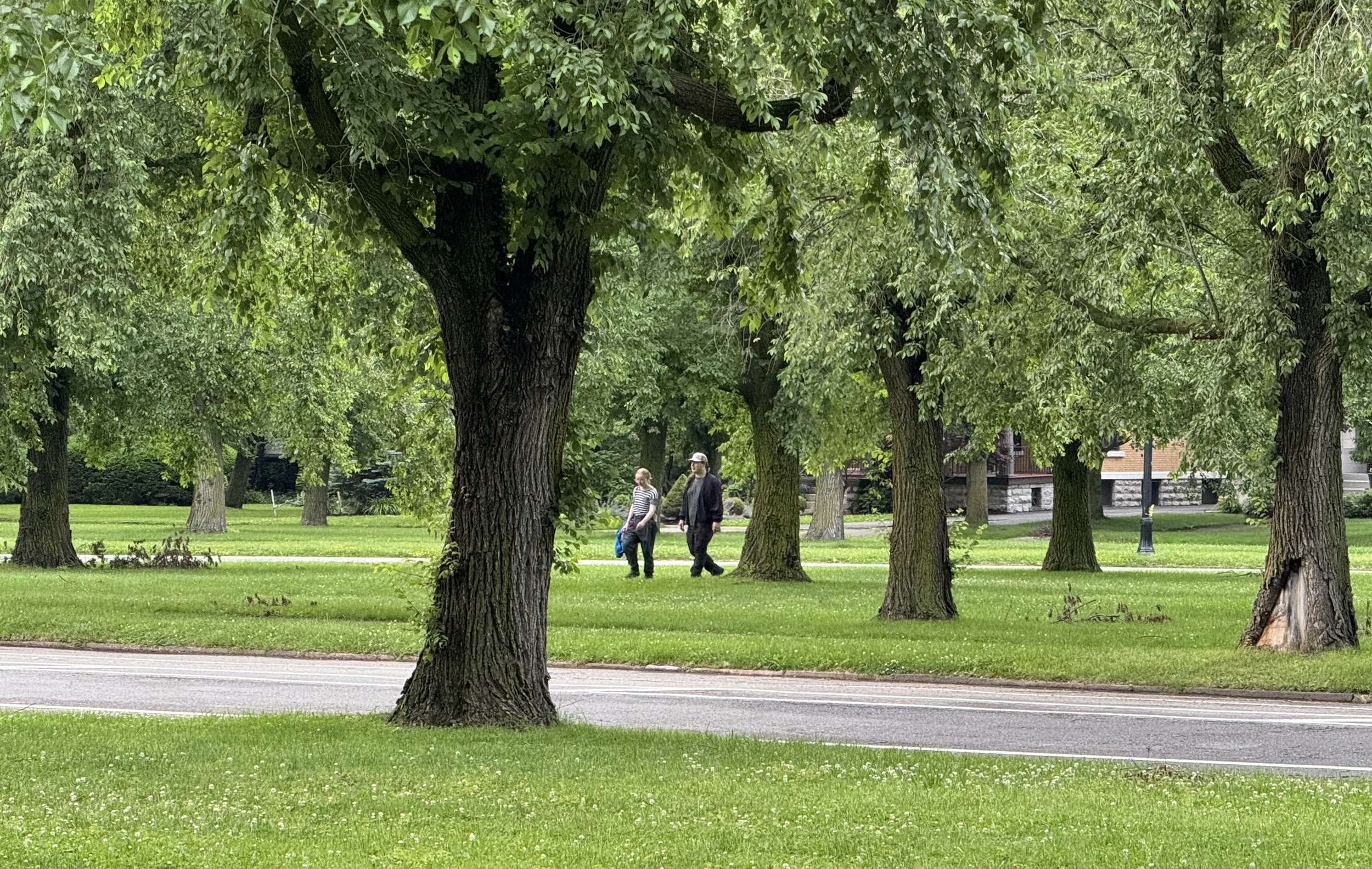
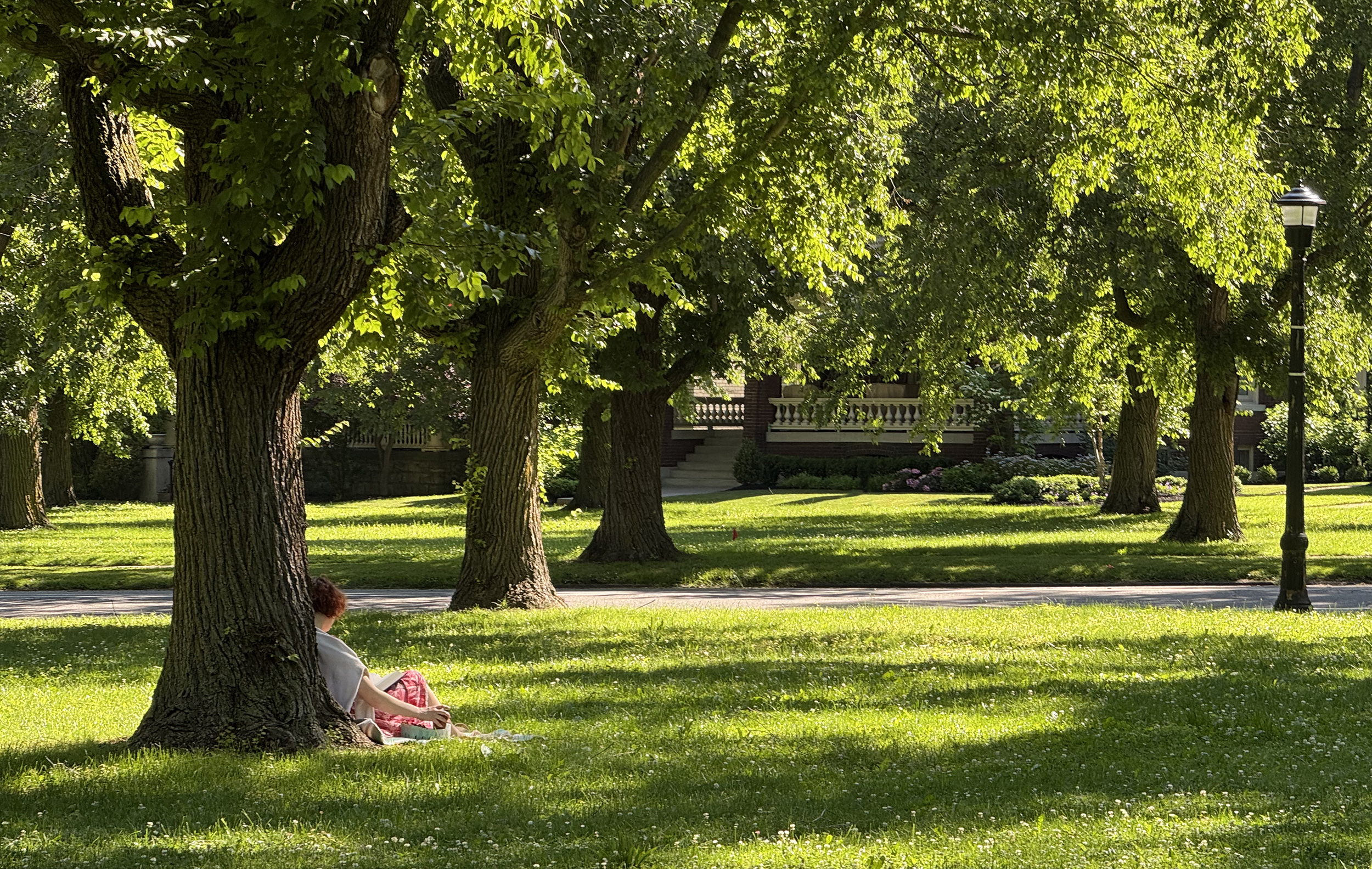
Visiting Buffalo, I see now that the term “parkway” must have been hijacked—most likely by those building highways and housing developments—and distorted and diminished into something Olmsted and Vaux did not intend. The trees and lawns they wove into Buffalo’s fabric were intended as much more than decoration. They wanted children climbing the trees and couples stretched out on the lawn. They wanted these lush ribbons of green to act as a shared front yard that bound communities closer together, making them stronger.
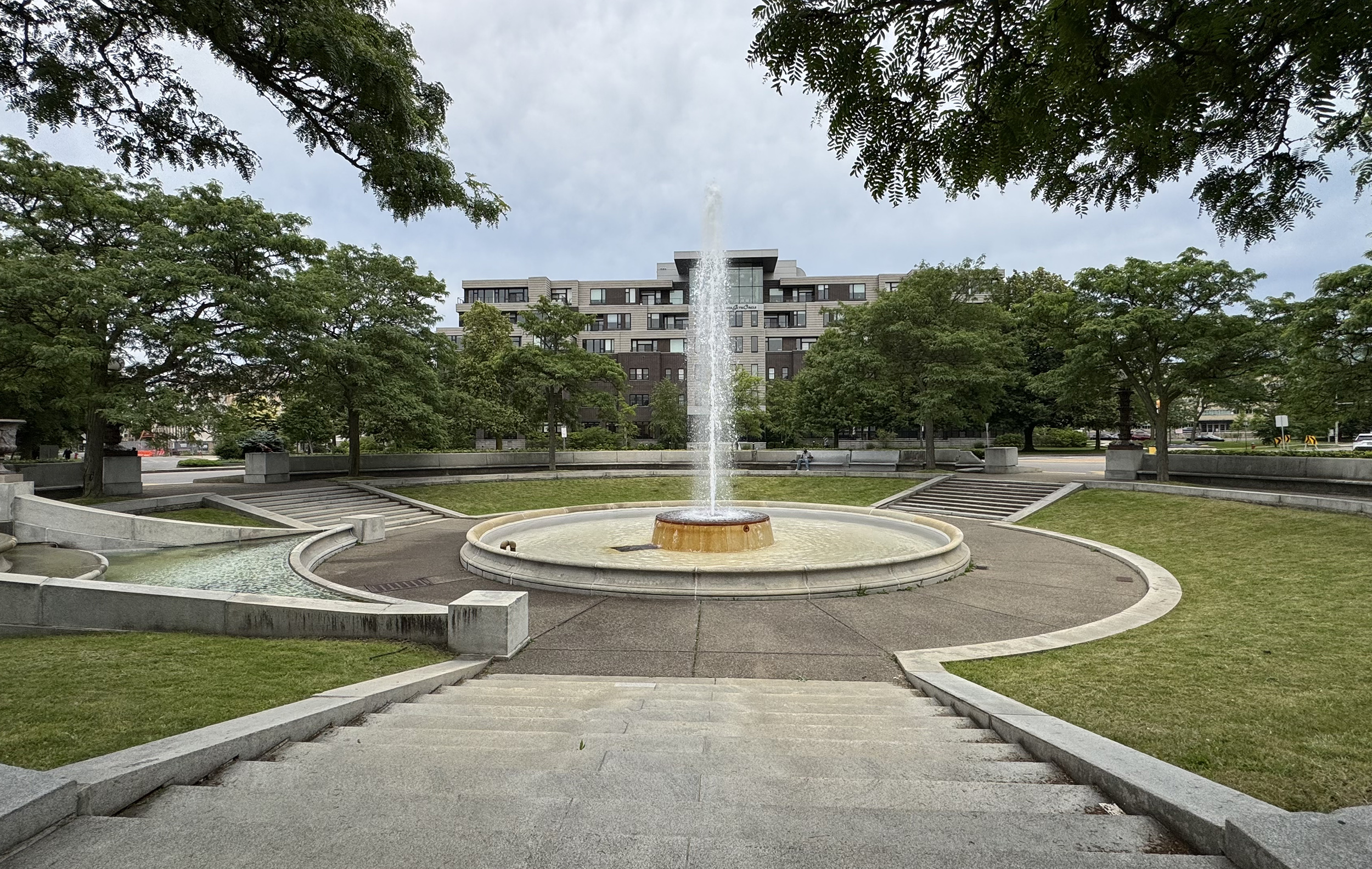
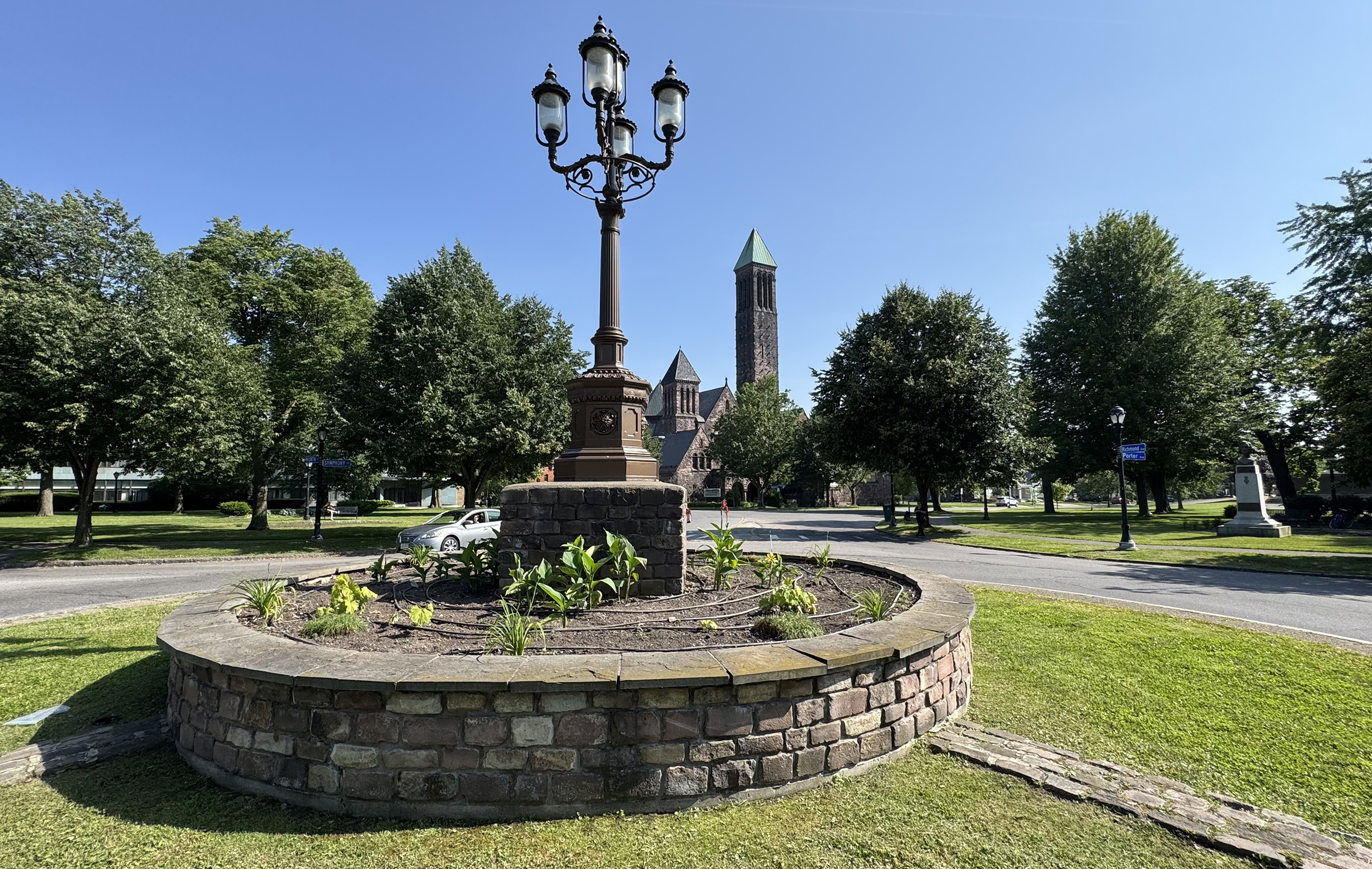
My goal in going to Buffalo was to photograph panoramic tours of the three Olmsted and Vaux parks in the city. (There are several other parks designed by the Olmsted sons that I’ll return to document at a later date.) Because of its proximity to Delaware Park, I rented rooms on the top floor of a beautiful house right on the Soldier’s Circle, a key link in the chain of parks and parkways. The circle is the hub where the Lincoln Parkway splits into the Chapin and Bidwell Parkways.
The evening I arrived, right away, I was impressed by the manicured splendor of the cut lawns and pruned trees around the circle, but I was eager to visit the parks where I would be spending the bulk of my time. If I’d only been in town for 48 hours, I might have left, dismissing the green outside my door as merely pleasant. It took a bit longer than that for the full effect of Buffalo’s authentic parkways to sink in.
By day, I was out in the city’s lavish public parks, sweating in the hot summer heat, documenting others enjoying the Olmsted masterpieces. I was in my happy place, doing the work I came to do, but I had to move quickly: there was a lot of ground to cover. I was anxious whether I would get everything done. When I went home in the evening, I had a shower and went out to find dinner. It took a few of these evening expeditions to realize something extraordinary was going on.
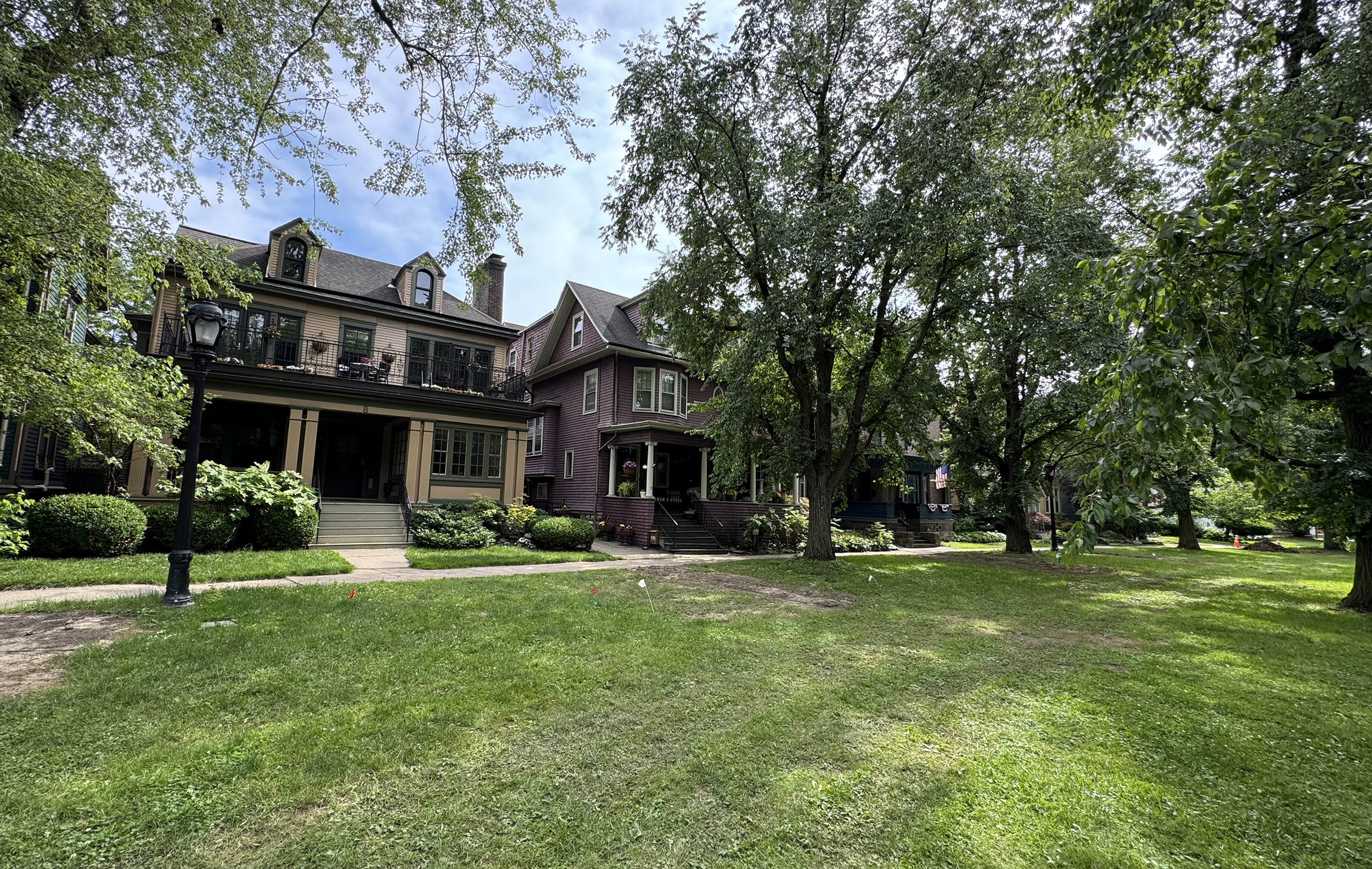
Beyond the sidewalk that ran in front of the house where I was staying wasn’t asphalt, but lush grass and a thick canopy of shade trees. Instead of traffic, on my walks to dinner, I was encountering people. They weren’t rushing anywhere. These people were stretched out on the grass, or with their backs against a tree and noses in books. When it got hot over the weekend, a sunbather appeared on the lawn outside my window, moving her blanket to follow the path of the sun. I often saw coolers circled like wagon trains, with their owners serving dinner and drinks to their friends and family.
After I finished my own meal, which often involved crispy Buffalo wings, I’d take a long walk through the Elmwood neighborhood full of its beautiful homes, no two houses the same design. Second story porches peeked out everywhere. Eventually, my path always intersected with a parkway, and I would follow it home, enjoying the grass sweeping against my toes. Any stress I’d been feeling during the day had melted utterly away.
As my evening strolls through the grass became a routine, I realized joyfully that as long as I’d been in Buffalo, I’d either been in a park, a parkway, or close to one or the other. For those who lived in the Elmwood neighborhood, obviously, this was their daily norm. To me, this park proximity clearly had beneficial effects beyond exercise.
Even after photographing parks seriously for several years now, I was not prepared for the welcome Buffalo parks generate. In other Olmsted parks, it’s not uncommon to have impromptu discussions, or brief, polite encounters. In Boston, Brooklyn, or Manhattan, I might expect one or two such encounters per day. Mostly, it’s folks asking directions, or what I’m photographing.
In Buffalo, it was rare an hour would pass without someone approaching me to have a chat. Lots of times, people wanted me to take their portraits with their cameras. One young man followed along with me for a while, wanting to talk camera tech. He apologized for not being great with small talk, which I assured him was not a deficiency that was apparent to me. Another man named Derek insisted I capture a crafts event he was throwing for local kids. Many others fixed me with an inquisitive look and stepped right up to ask what I was doing. I’d explain I was documenting the park, and we’d share our admiration of Olmsted’s work.
“Well, enjoy and good luck! Perfect day for it.”
I loved that not only did everyone in Buffalo know who Olmsted was, they all seemed to clearly understand what I was only beginning to grasp—with the parkways joining the Olmsted parks together, design-wise, Buffalo is a giant step beyond the relentless traffic grid that dominates most American cities.
Great Olmsted parks generate a transformative sense of freedom and community among those who visit them. Instead of that sense existing only behind the walls and iron gates of a city park—no matter how magnificent—the parkways in Buffalo act as kinds of canals themselves, letting that feeling flow out and seep into the rest of the city.
*
Not all of Buffalo’s parkways have survived and thrived like those in the well-heeled Elmwood Village.
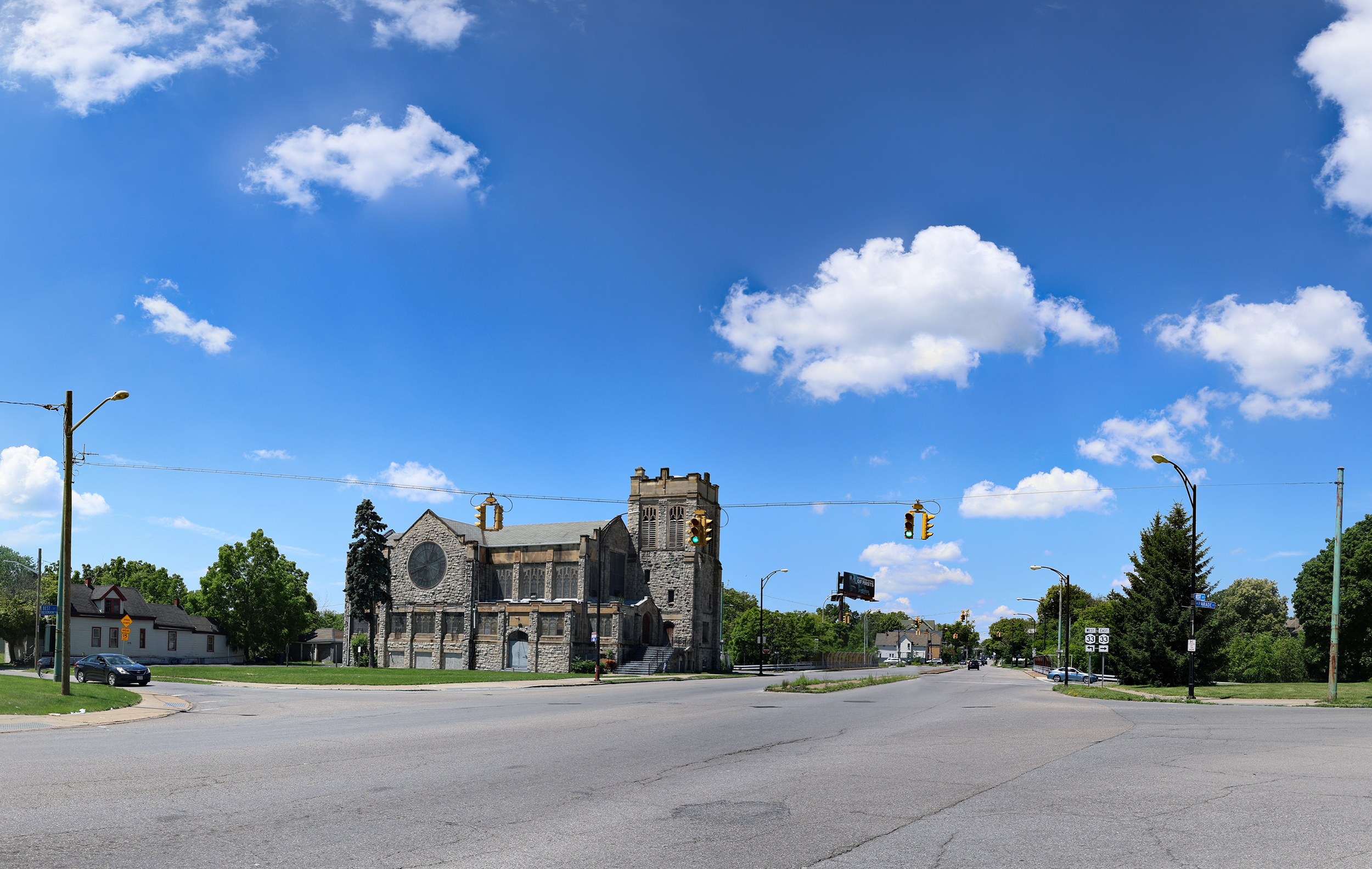
An additional artery of green once snaked down from the eastern corner of Delaware Park, all the way to what is now known as MLK Jr Park and then into downtown. This parkway was known as Humboldt, and like those in Elmwood, it was a lengthy carpet of lawn and trees running through thriving communities. During the 1950s and ‘60s, when urban planners across America were replacing downtowns with highways everywhere, someone in Buffalo thought it would be a good idea to dig up the grass and trees of the Humboldt Parkway. In the trench that remained between predominantly black people’s homes, they wedged four lanes of packed traffic.
Today, this is generally recognized to have been a bad idea. As you drive east of Elmwood, the differences between it and the other neighborhoods can be stark and depressing. There seems little doubt the scar left where Humboldt Parkway once was is to blame.
Recently, New York’s governor found around a billion dollars to cap a portion of the parkway, letting the cars drive in tunnels and adding some green up top. To many in Buffalo, the Albany plan is not sufficient. Local activists have urged that rather than a bandaid cap (which won’t mitigate the pollution, just redirect it), this midcentury mistake needs to be undone. They are working to see that the Humboldt Parkway is restored to the original Olmsted and Vaux design.
In short, the neighborhoods on either side of Humboldt want to reclaim not just the lavish lawn and shady trees, but they want to take back and restore the original meaning of “parkway.” Instead of an incessant river of traffic and pollution, they want the heart of their community back and made whole again.
Related