

Niagara Falls was America’s first state park. As awe-inspiring as the waterfalls are, the effort to rescue them changed the world.
Frederick Law Olmsted was born and grew up in Hartford, Connecticut. From an early age, though, his father took him on lengthy journeys through the New England wilderness and well beyond. This was long before steam engines. In addition to walking and riding, they crossed great distances in canal boats. In 1828, just three years after it opened, the family travelled via the Erie Canal to western New York to visit an uncle.
At the age of six, Olmsted beheld Niagara Falls for the first time.
Like all who visit, the falls left an almost spiritual impression on the boy. He, too, was overwhelmed by the enormity and power of the natural splendor. Lush forests hung to the banks and birds filled the skies. He and his father spent several days admiring the wonder from all angles before returning to the east coast.
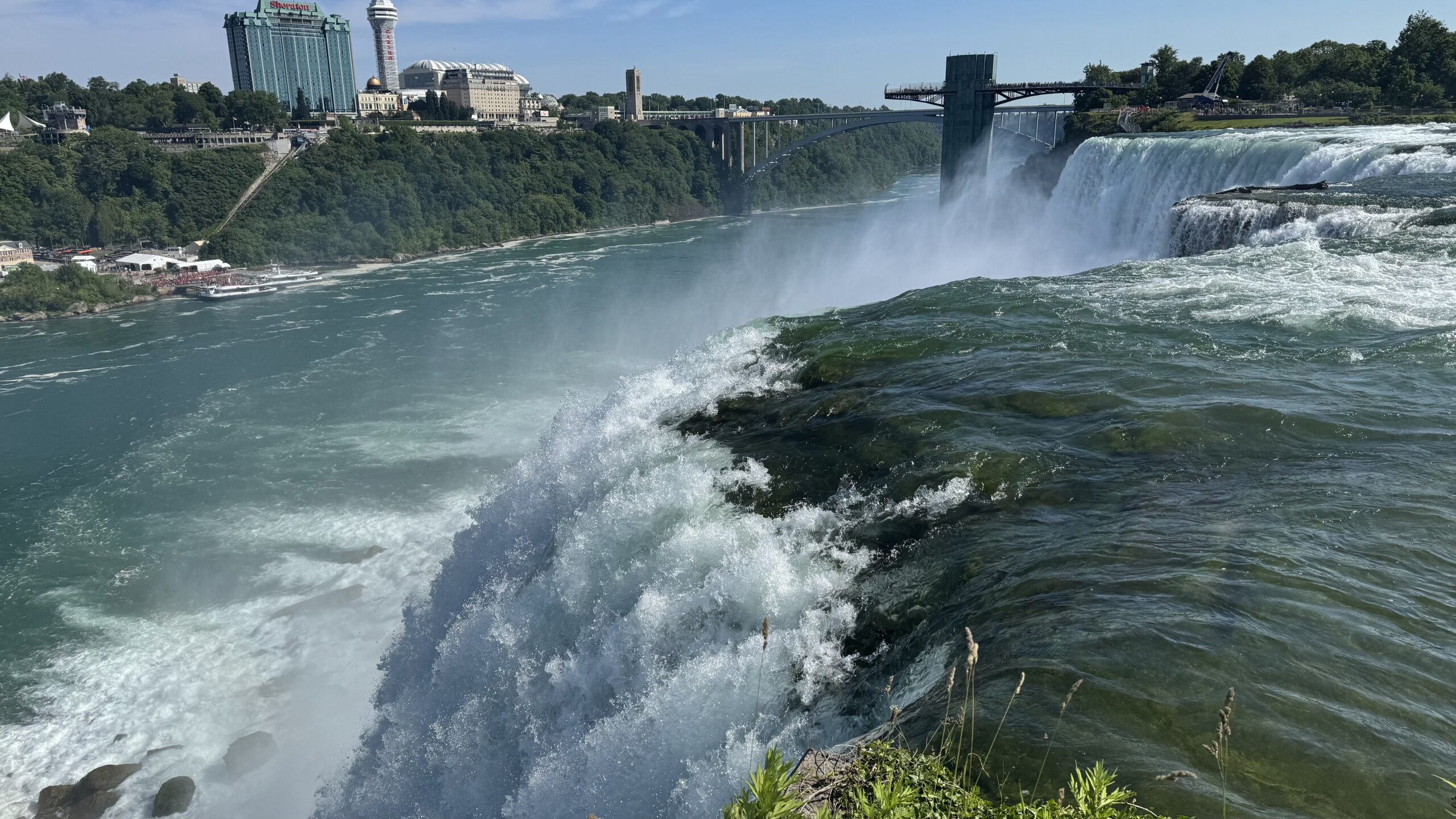
Olmsted did not return to Niagara for another 40 years. When he did in 1868, he was shocked by what had happened to it in the intervening years. Factories and hotels lined the banks. It was impossible to view the waterfalls without paying a fee, and every manner of sideshow, snack shack, and souvenir stand vied for people’s money. Even worse, the factories that used the Niagara river to power them had reduced the flow of the water, making the falls themselves less dramatic than he remembered.
A year later, he and his partner, Calvert Vaux, visited the falls together in early August. They were in Buffalo to present their plans for a park system in that city. While in town, they took the side trip, heading north to the waterfalls on the Canadian border. Along with them came William Dorsheimer, an influential lawyer and politician who was an early and regular supporter of their work. Dorsheimer also brought a young architect who had designed his house, H.H. Richardson. During the trip, Olmsted hatched his plan: he wanted to save Niagara Falls.
He later recalled the moment:
“While rambling on Goat Island with Mr. Dorsheimer and Mr. Richardson, I brought the subject before them and, as there were, at the time, two or three other gentlemen at Niagara with whom we had been associated in the project of the Buffalo Park and Buffalo State Lunatic Hospital ground, they were asked to meet in the evening at Mr. Dorsheimer’s room to consider the matter.”
Discussions that summer evening led to more than a decade of campaigning, trying to convince the New York State government to acquire the land and restore the world wonder its natural beauty. Olmsted worked with a team of writers and speakers, making the case in print and in lectures across the country. A turning point was when the famous landscape painter Frederic Church became involved in 1878.
Those waging the “Free Niagara” movement even sought international support. Charles Darwin and William Morris signed petitions urging the falls be saved. In 1883, after many failed attempts, the state house in Albany agreed to look into the matter. In 1885, a commission was formed. Only by January 1887 did Olmsted and Vaux submit a plan for the reservation—18 years after the campaign began.
The details of the many battles the Free Niagara movement fought are interesting, but they also are familiar to modern readers. Anyone who has followed a more recent effort to preserve a wetlands, rescue a polluted river, or stop construction in a beloved woodland knows the kinds of players involved. We’ve all witnessed the uphill battle to win hearts and minds before the bulldozers get working. Since this kind of story is now almost a trope, it’s easy to forget that when Olmsted launched this campaign to Free Niagara, nothing of the sort on such a scale had ever been attempted before. Many thought the effort foolhardy, impossible, and doomed.
Not only was Olmsted venturing into unknown territory, he was asserting a right no one had ever even imagined to claim before.
Congress made Yellowstone the country’s national park in 1872, but the effort was to protect a remote, pristine wilderness from any kind of development. Parts were still unexplored by white people. Initially, only the native Americans who already lived on the property were supposed to have any claim to it. Olmsted had something completely different in mind for Niagara. He was eying to take privately owned land—industrialized and commercialized land—restore it, and make it public: something anyone could access and enjoy.
Olmsted believed that in a democratic land, everyone was entitled free access to natural beauty. What’s more, democratic governments had a responsibility to protect our shared wilderness for the sake of future generations. He first stated this concept in the Yosemite Report he wrote and submitted to the California governor in 1865. In his effort to save Niagara Falls, he gave life to the concept.
More importantly, the idea was widely embraced—both here and abroad. Public lands have become a key part of what many Americans believe makes the country great.
To be sure, the Free Niagara campaign succeeded in large part because of influential political connections. Dorsheimer, himself, became the state’s lieutenant governor during the campaign. He was friends with Buffalo’s mayor, Grover Cleveland, who later became state governor, and then the American President—all while the effort to save Niagara Falls was being waged. Although political support and legislation made the dream a reality, President Cleveland and everyone else first had to wrap their heads around Olmsted’s beguiling notion:
Some special, exceptionally beautiful lands rise above private ownership and demand public stewardship.
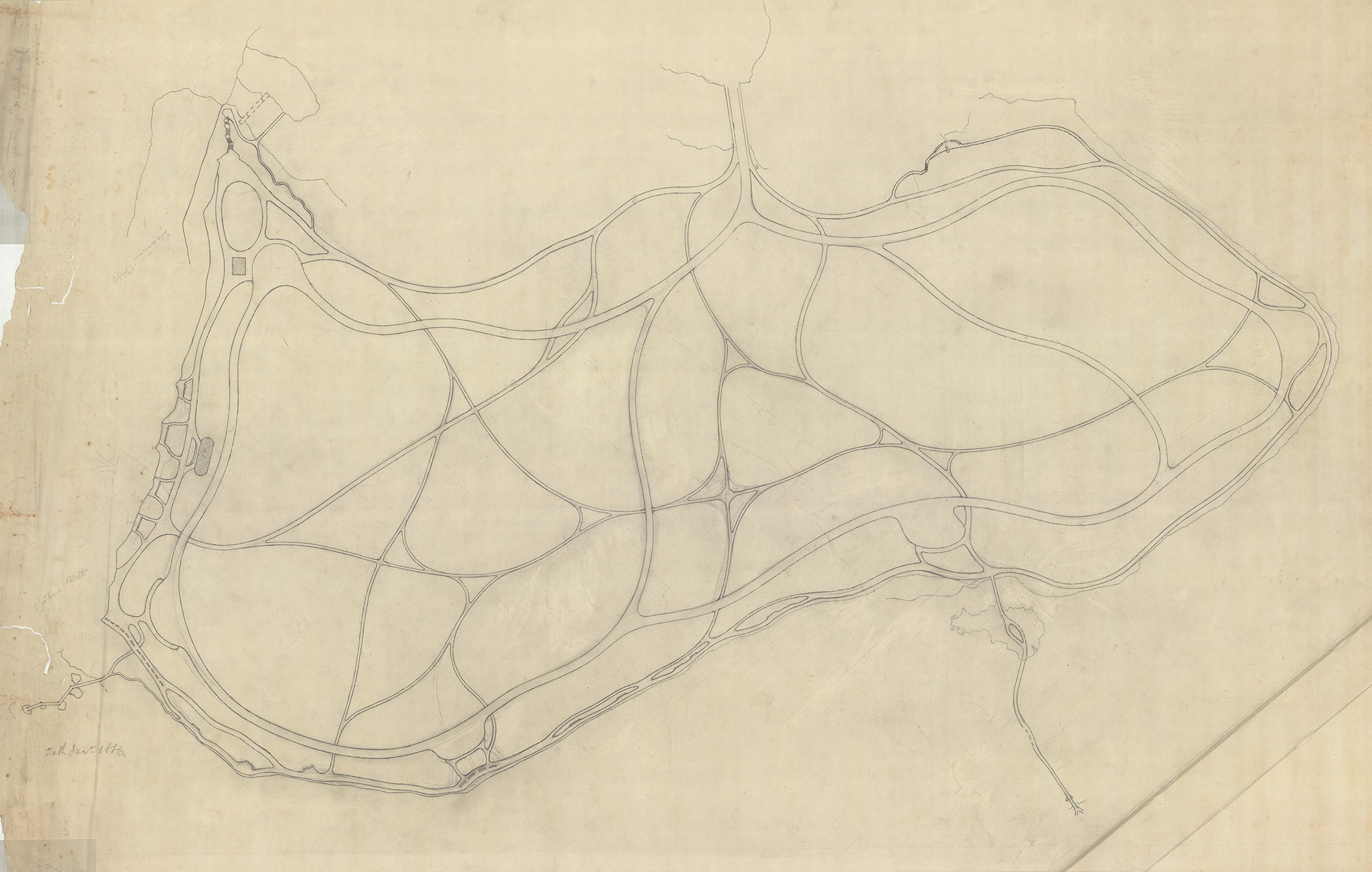
When they were given the assignment to turn Goat Island and the American side of the falls into a place the public could enjoy at leisure, Calvert Vaux travelled from New York City up to Olmsted’s new home and office just outside Boston. They had dissolved their business partnership almost 15 years earlier, so the reunion must have felt momentous and possibly gratifying. No longer were they struggling to have their vision accepted—one of the world’s wonders was now their canvas to work on.
Both said making such a dramatic environment accessible to everyone was one of the most challenging design tasks they had ever undertaken. The draft plans in the archives show the effort they made to preserve the forests and paths on Goat Island, and how they prioritized walkers over carriages on the paths that wound around the circumference of the island.
Unfortunately, only elements of what they designed were ever implemented. Politics were not entirely helpful to Olmsted’s cause. As governor, Cleveland appointed a Niagara Reservation Commission. Dorsheimer was on it, but so was Andrew H. Green. Green and Olmsted had a longstanding feud from the earliest days of Central Park. This appointment almost prompted Olmsted to resign immediately, but as long as Dorsheimer could provide balance, Olmsted said he would stay involved.
Not long after Olmsted and Vaux submitted their plan, though, Dorsheimer died. Vaux did what he could to implement their plan working independently for the commissioners.
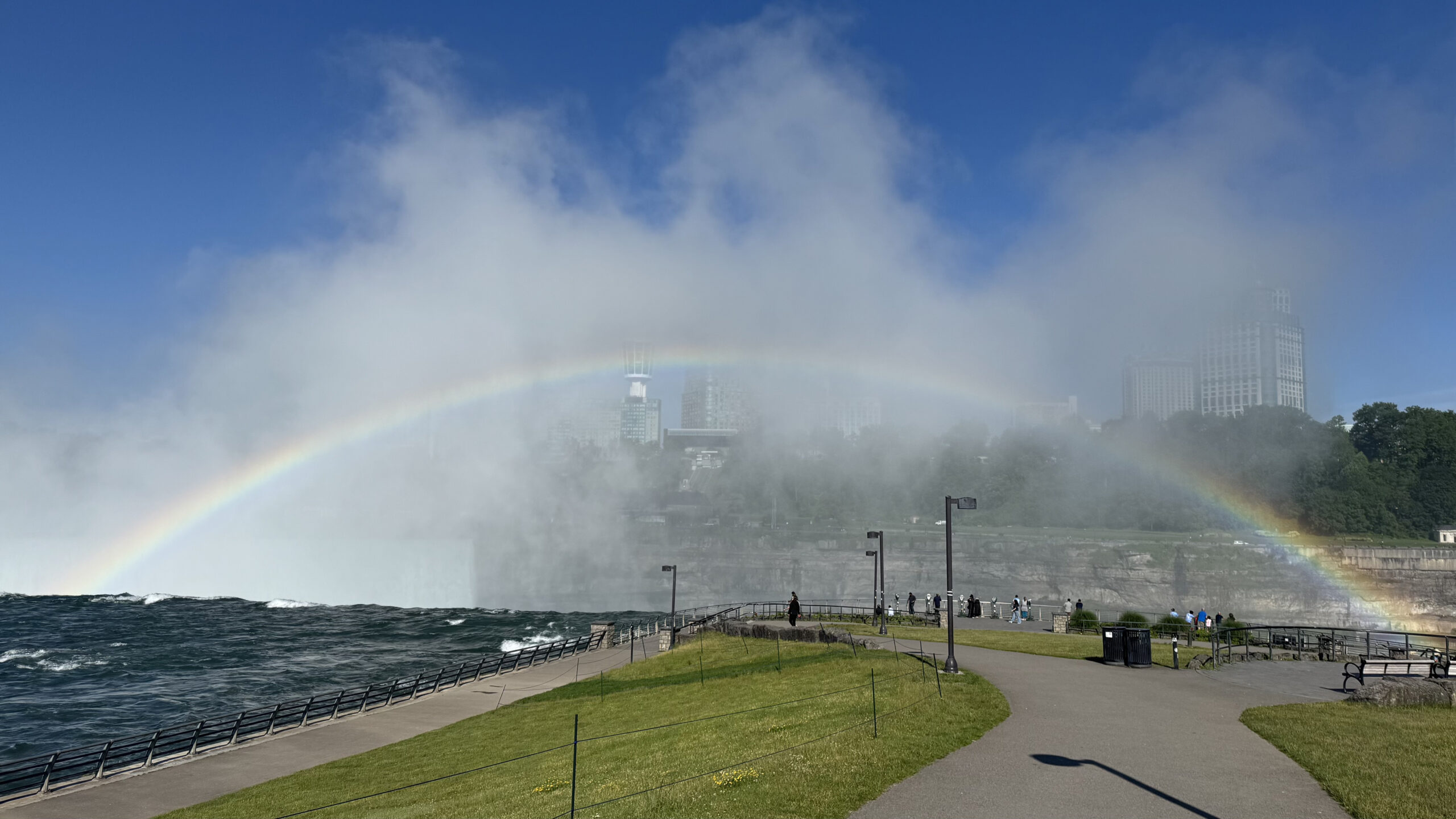
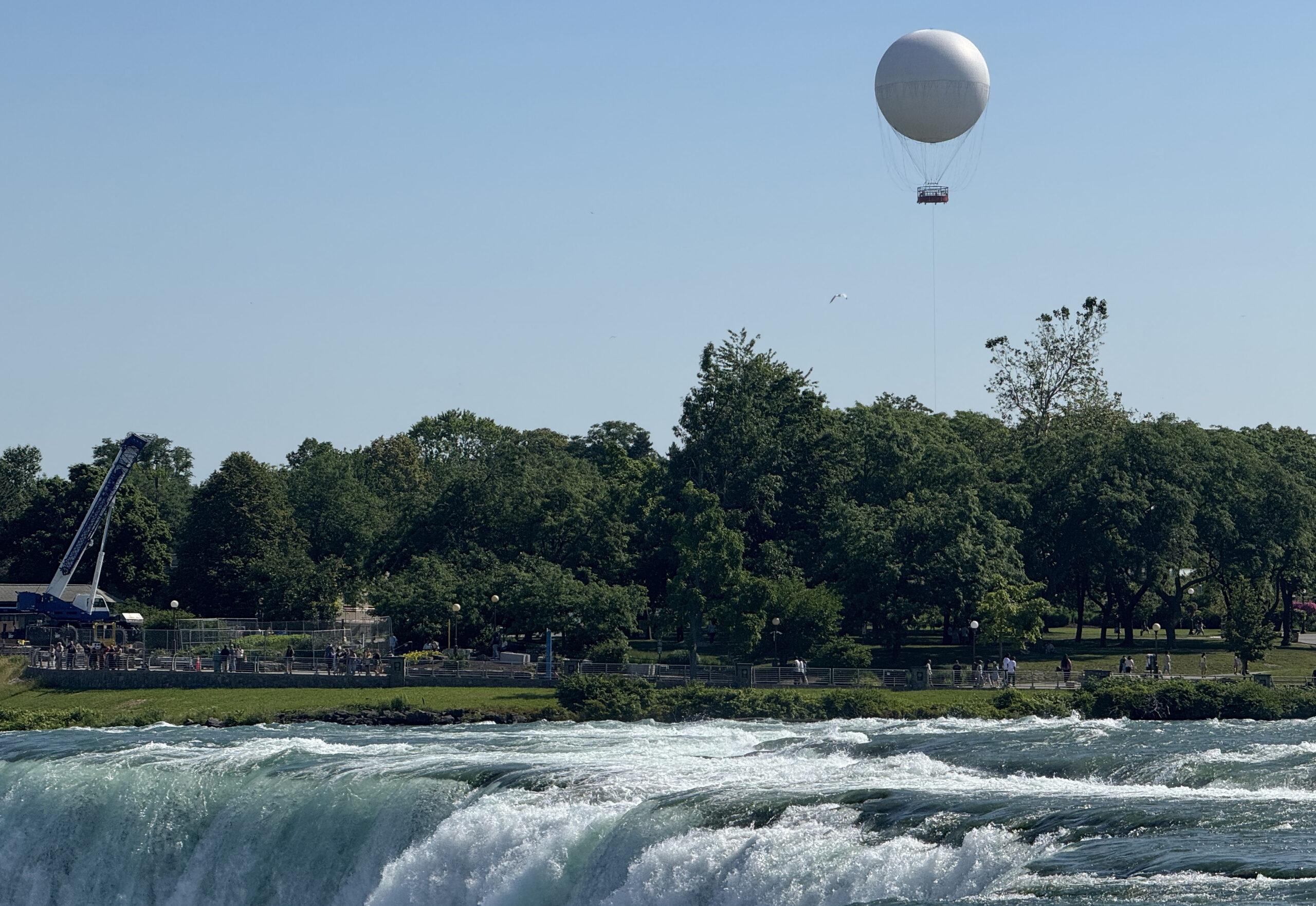
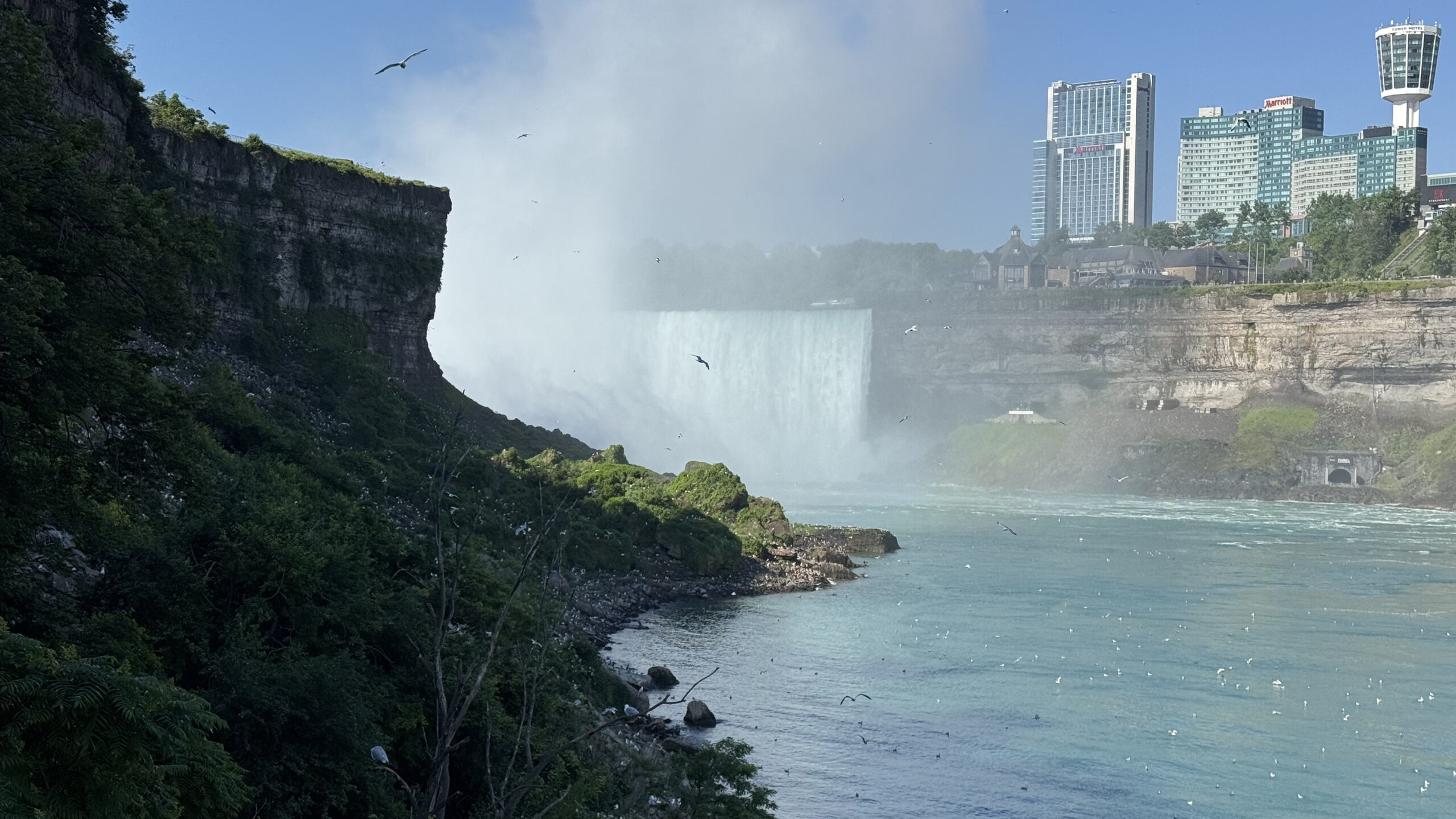
Many subsequent designers have shaped how the falls are viewed and visited today. The introduction of cars, tour busses, and sky scraping hotels have clearly compromised the wilderness feel of the reservation. Still, the falls continue to astound. It’s a joy and blessing they are framed by trees and birds again. Olmsted and Vaux’s chief contribution is the epic and visionary undertaking to save the landscape in the first place.
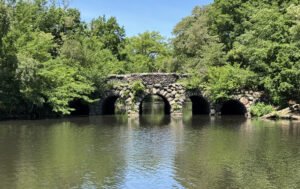
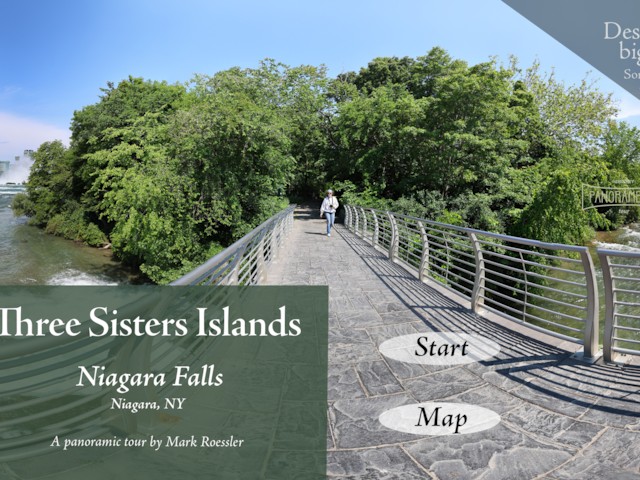
Still, if you want a sense of what Olmsted and Vaux had in mind, one element of their design was retained—a walk out among the the Three Sisters Islands.
Up river from the mighty horseshoe falls, near the eastern tip of Goat Island, a series of three islands take bold steps out into the middle of the roaring rapids. The islands shrink in size the further out into the torrent you go. The first two are large, and in the middle of them a muffled silence takes over. But out at the end of the chain, you find yourself standing on a collection of rocks amidst a few trees and bushes hanging on for dear life. The roar of the spectacle all around you is deafening and humbling.
Many, including Olmsted, claimed this vantage point on the third island was more inspiring than the falls themselves.
As debatable as that claim may be, I would contend that one achievement of the Free Niagara Falls campaign that may dwarf the importance of the falls is the campaign’s influence across the globe. All democratic nations everywhere now have national parks protecting their most cherished landscapes. All are as varied as the flora and fauna contained, and all are governed by different laws. The kernel idea for each of them, though, came from one man on a ramble with friends somewhere on Goat Island.
Note: I referred to Francis Kowsky’s excellent book, The Best Planned City in the World, for most of the history and the quotation in this story. All errors and erroneous conclusions are my own.
Related