

The Back Bay Fens in Boston was the first link of Boston’s park system, the Emerald Necklace, to be designed by Frederick Law Olmsted.
Salvaging what had essentially become an open sewer and turning it into a riverwalk was a great technological feat. Today, though, the Fens is the section of the park system that’s been most altered since first opened and is the least park-like. In her 1982 book, Olmsted and the Boston Park System, Harvard landscape architecture historian Cynthia Zaitzevsky described the Back Bay Fens after years of neglect and questionable additions as “a rather peculiar collection of spaces that appear to be connected entirely by accident.”
Thankfully, since then, today’s Emerald Necklace Conservancy has done a lot of work to breathe life and sense back into the this essential link in the chain.
Although Olmsted knew the head Boston Parks commissioner personally and had many influential friends in Boston, the city initially wanted someone local to design their new park system. During the mid-1870s, Olmsted was brought in on an unofficial basis to review possible settings for the park system, and he gave his opinion. But he was also careful to keep his distance, wary of undercutting his professional interest in the project.
Eventually, the city decided to hold a contest for the future park’s design. When asked to be a judge, Olmsted bowed out. He cited the jealousies and problems that had arisen from his and Vaux winning the competition to design Central Park 20 years before. He suggested it might be a mistake to hire an amateur.
The park commissioners went ahead with the contest. Hermann Grundel, a flourist, won first prize and awarded him $500 in prize money. Boston landscape architects declared the winning design to be “childish.” Subsequently, Olmsted was hired in 1878.
From the outset, Olmsted was dubious the tidal estuary with its saltwater marshes would ever be an effective park, and he initially called the project “the Back Bay Improvement.” He saw rescuing the troubled landscape as more of a technical and engineering challenge than a design one.
Historian Zaitzevsky described the scene:
“Both streams [flowing into the area] received raw sewage, which was carried downstream and deposited in the Back Bay full basin. As the tide fell, some of this was carried off to sea, but the residue lay on the mud flats, baking odoriferously in the sun. Eventually it became incorporated into the mud. Under these conditions, the last vestiges of the salt marsh could not remain healthy for long. When the park commissioners surveyed the area in 1877, animal life was no longer able to survive the waters of the Back Bay.”
At that time, the Charles River was tidal. At low tide, fresh water flowed through Boston and Cambridge into the Atlantic, but at high tide, the rivers and streams backed up as they became inundated with saltwater. As Olmsted saw it, the goals of the project were threefold: rid the area of sewerage, restore the salt marshes, and gain control of the area’s water levels. Regulating the water levels would be key to keeping the Fens park-like (keeping water always in the river beds), but also controlling flooding when it occurred from storm surges.
Through an ingenious system of flow control gates, Olmsted and the city’s engineers accomplished all of these goals. The project was completed in 1895, just as Olmsted was retiring. As he described the intended result, “it will be found to be, in the artistic sense of the word, natural, and possibly to suggest a modest poetic sentiment more grateful to town-weary minds than an elaborate and elegant garden-like work would have yielded.”
The Back Bay Fens Olmsted knew was always a salt marsh. Indeed, that’s why he insisted the city add “fens” to the name. Photos from the late 1890s show tall, soft grasses and a lazy estuary river. It has a very different, ocean-front feel. In 1910, though, the Charles River was dammed and disconnected from the ocean tides. The water that flowed into the Back Bay Fens now was entirely fresh water always. The decades of ingenious engineering efforts were made moot. The saltwater marsh habitat Olmsted worked so hard to preserve became an inland waterway with an entirely new set of fauna and flora. More severe changes were to come, though, forever stepping away from the initial “natural” concept.
To address the changes damming the river introduced, the Olmsted firm, run by Olmsted’s sons, offered comprehensive redesigns for the Back Bay Fens to the city, but none were ever employed. No other comprehensive plan was ever implemented. The result was a piecemeal dismemberment. Attempted murder by a million bad (though well-intentioned) ideas.
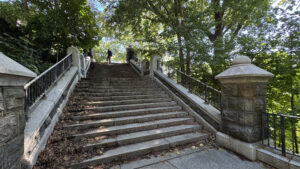
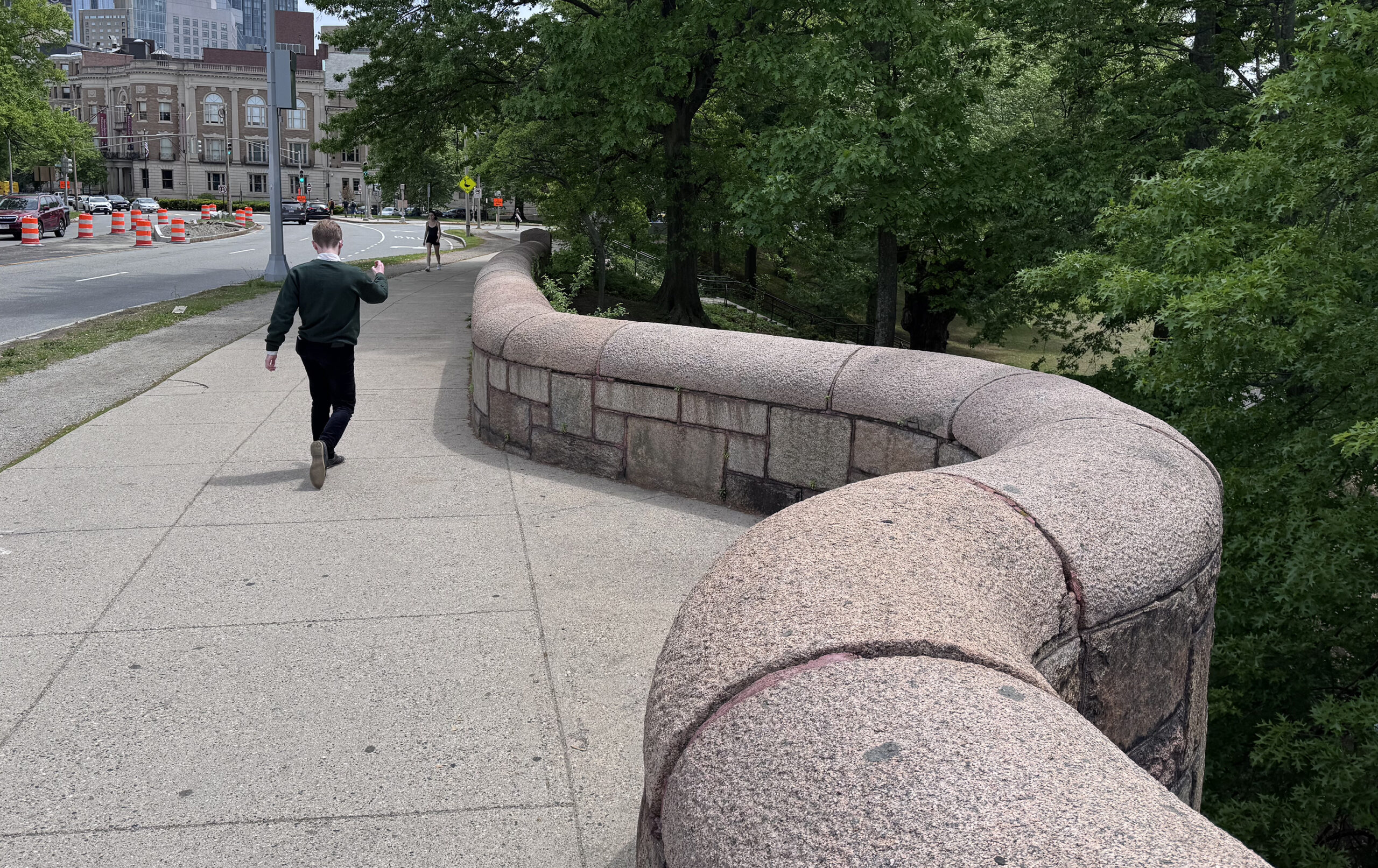
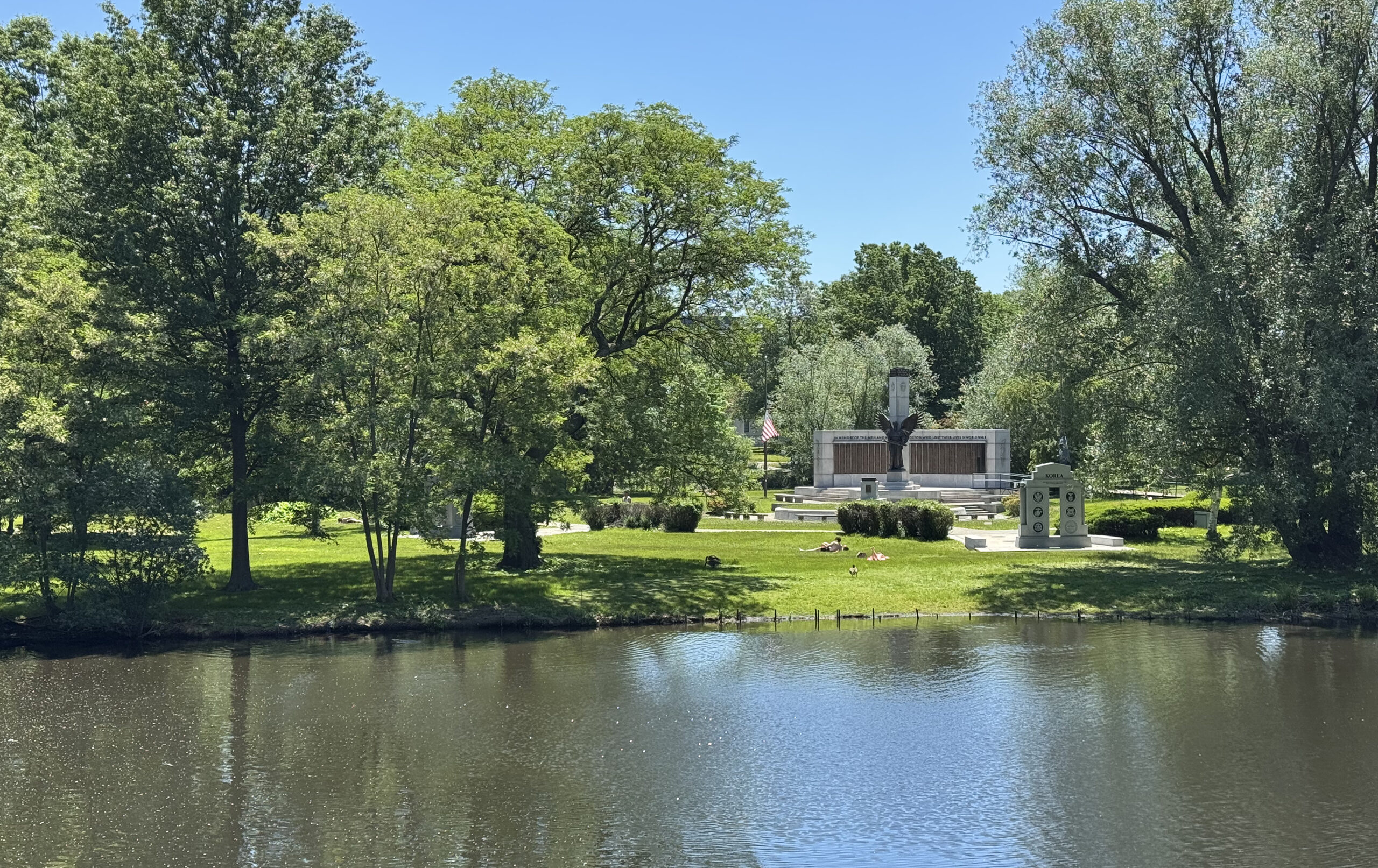
Only the outline of Olmsted’s park remains, a few bridges, and utility buildings. A lake, an island, and all of the marshes were lost to the landfill from other construction projects across the city, such as the subway. A football field with artificial grass and a running track was installed where the lake was. A gated rose garden and an elaborate war memorial awkwardly occupy a particularly picturesque meadow near Agassiz Bridge.
The other location that could contain an open lawn with shade trees is filled by private garden plots.
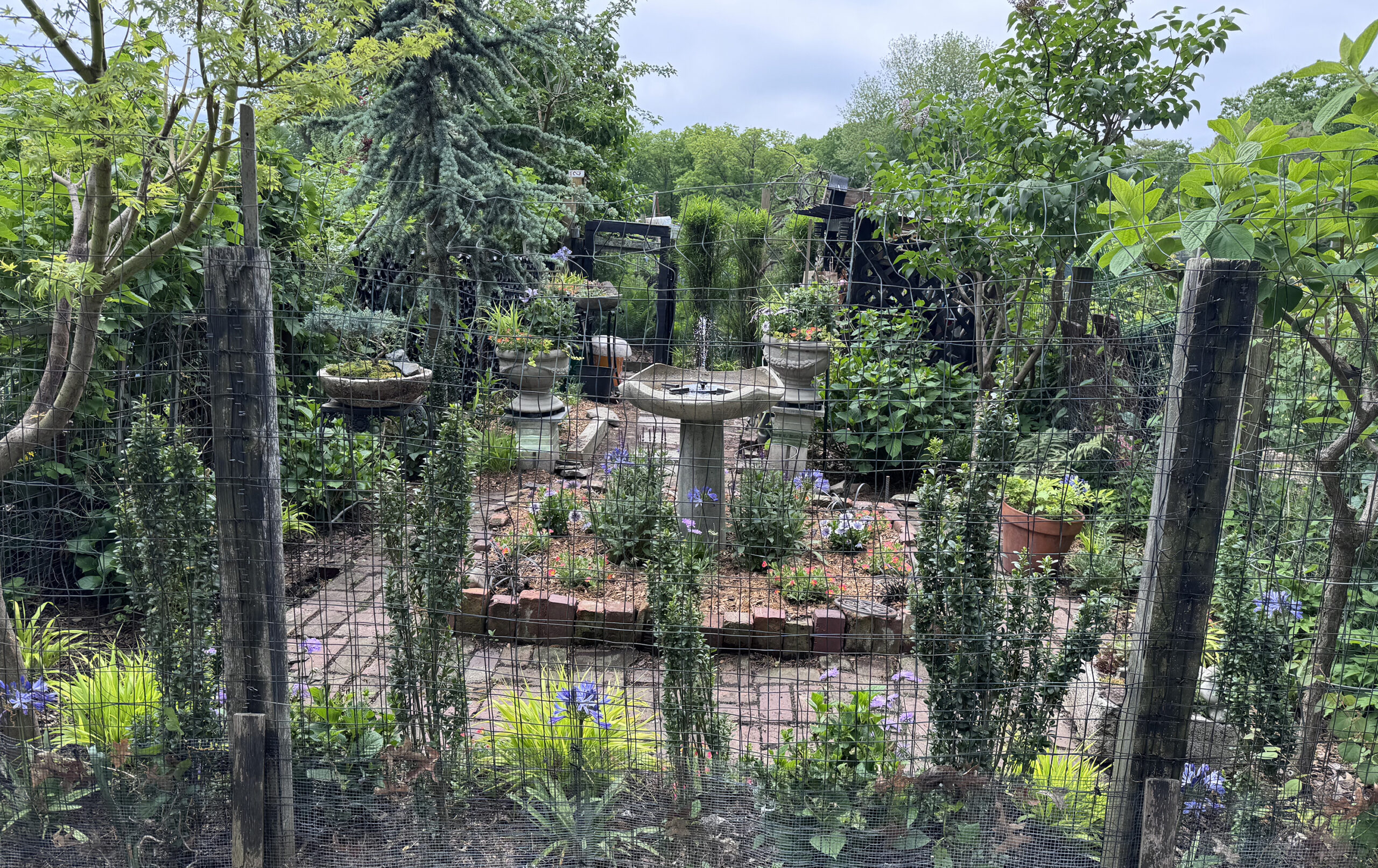
The Richard D. Parker Memorial Victory Gardens were introduced during WWII as part of a national effort to help the city during food shortages. The one in Boston boasts that it’s the last such Victory Gardens left in the same location. There, 75 acres of public park space was turned into “500+ individual plots maintained by 475+ members from… across Boston,” the welcome sign reads in one bullet point. The next states, the Victory Garden is a “symbol of the city’s diversity, resilience, and ongoing commitment to urban green space.”
Saving people from starvation during wartime, I understand. But today, these gated and padlocked pleasure cubicles defy everything Olmsted and his public parks are designed to offer those who visit them. Here, there is no escape for the “town-weary” as he envisioned. Instead of a garden, the fenced grid with narrow paths between them, feels like an overgrown, but well-heeled shanty town. Vegetable plots were in the minority. I saw far more private park benches, strings of Christmas lights, potted flowers, and trickling electric fountains.
In my own hometown, I live about a mile from the community gardens, and I’ve always been impressed how those gardeners have taken an unused lot and turned it into something wonderful. I’ve seen similar such efforts along train tracks, in neglected lots, or up against highways. The Back Bay Fens is not unwanted, untended land, though. It’s supposed to serve far more than 475+ people. More than 6 million live in the metropolitan region.
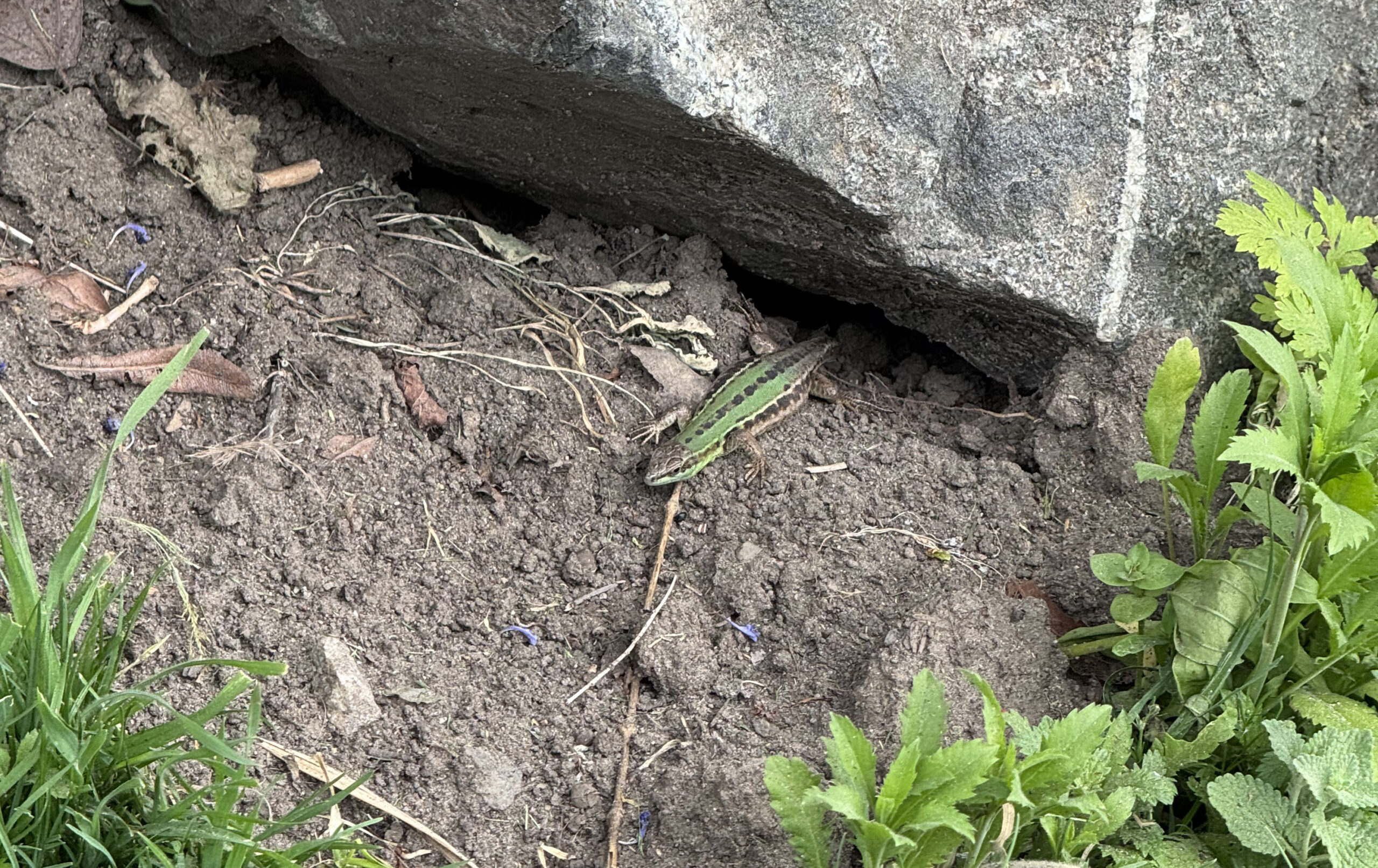
Often when I spent time photographing in the Victory Garden, those people I encountered inside their decked-out private gardens looked back at me defensively, like I might be intruding on their privacy. This was a first for me in an Olmsted park. Ironically, the communal compost and fertilizer piles around the Victory Garden have been successful in attracting one exotic foreign visitor. The first to arrive liked the gardens so much, they brought their whole family. In the only place in New England, Italian wall lizards have made their home in the gardens because it’s warm enough in the manure heaps year round. They are the only lizard in the north east.
The worst intrusion to the park and park system, though, came in the 1960s when the highway system cut off the park’s clear access to the Charles River and Commonwealth Avenue. Again, as Zaitzevski assessed, “The network of overpasses from the Charles River at Storrow Drive to Boylston Street has virtually destroyed Beacon Entrance.”
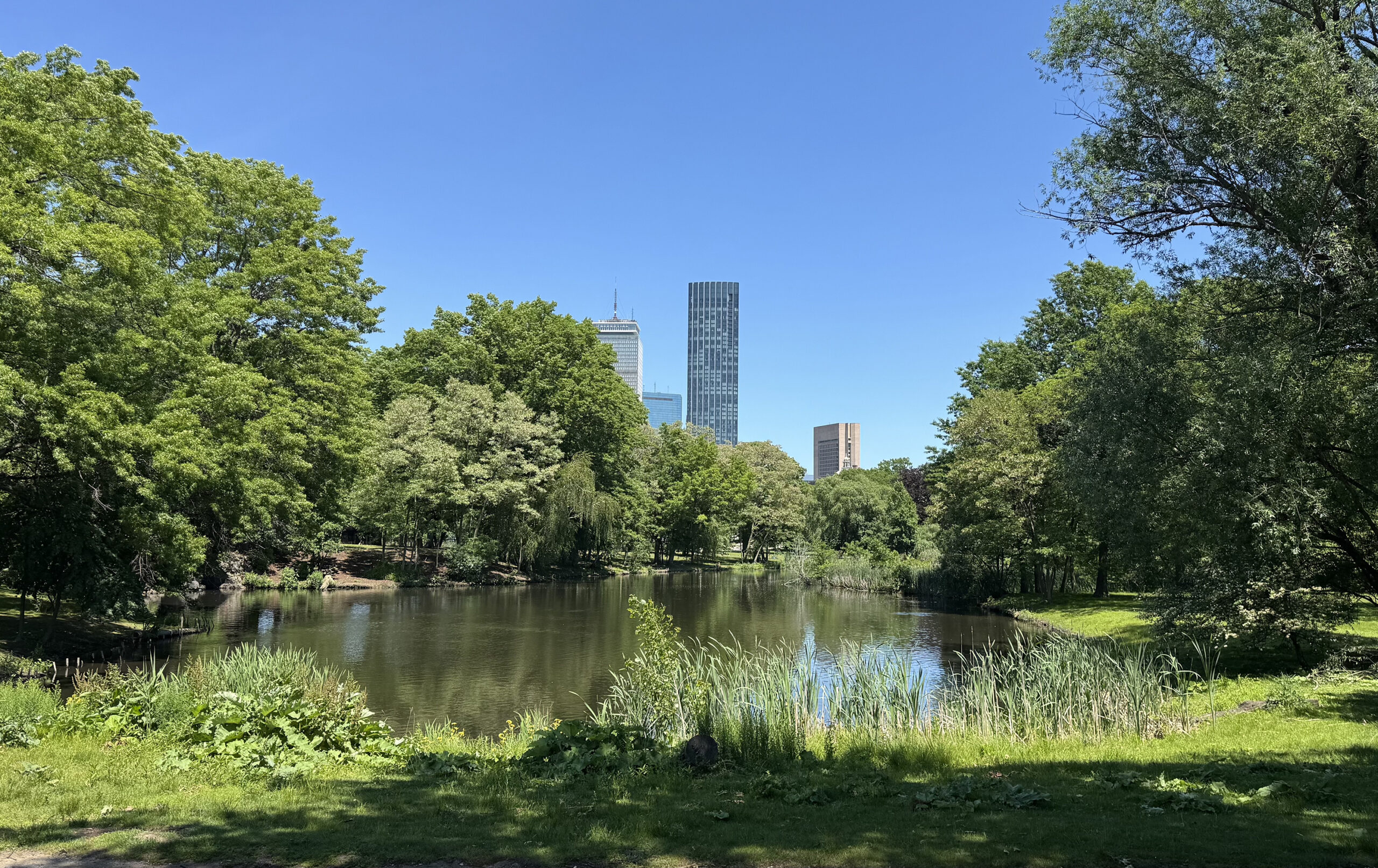
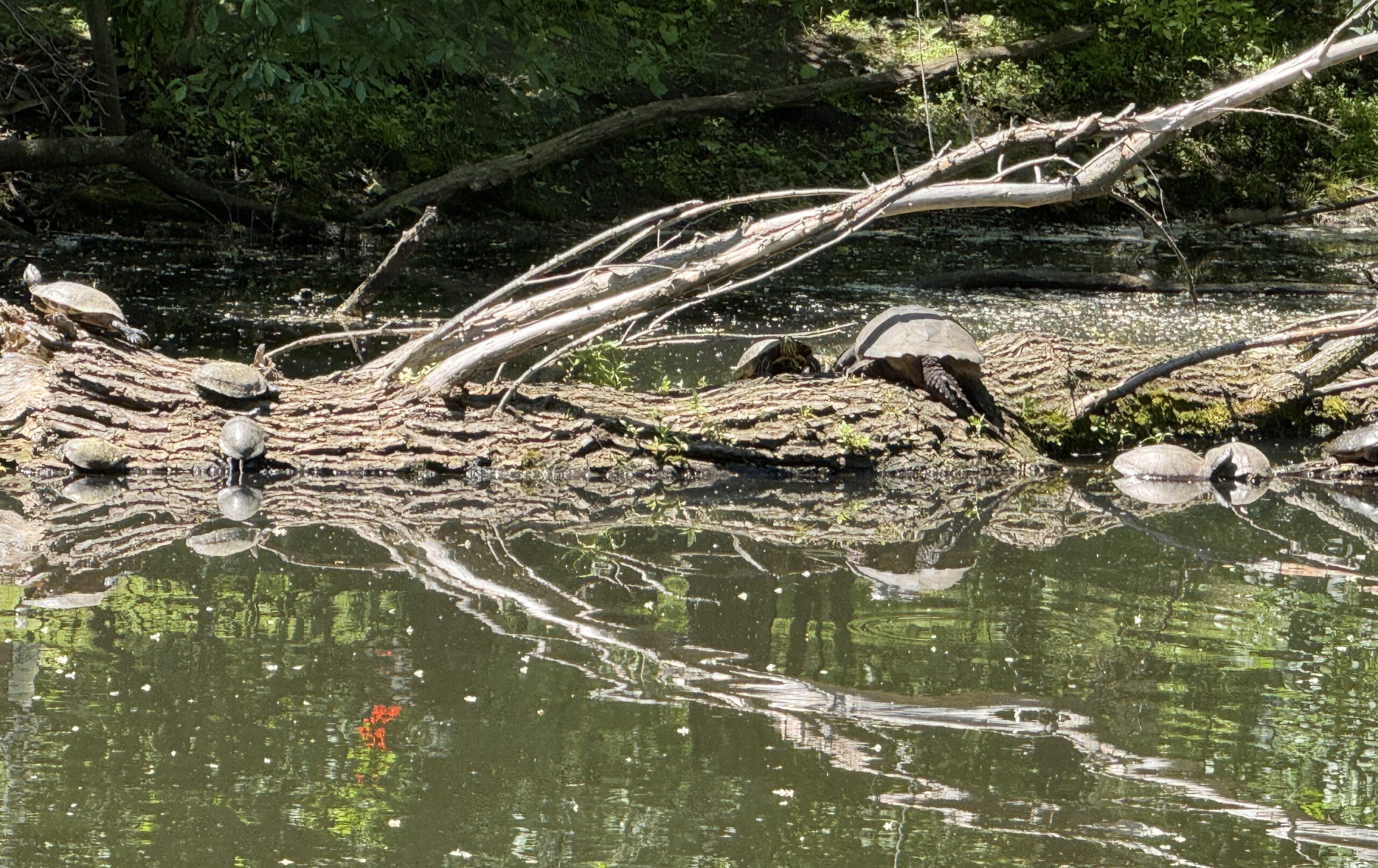
Formed in 1997, The Emerald Necklace Conservancy has worked hard to bring planning and foresight back to all of the parks in the chain, and they have made great strides restoring a sense of cohesion to the Back Bay Fens. Lush plantings along the waterway and roads keep the walks mostly shielded from the city traffic, and wildlife has returned in an abundance. I’ve seen great blue heron going after the large fresh water fish. Among many smaller turtles, I saw a giant snapper near Agassiz Bridge.
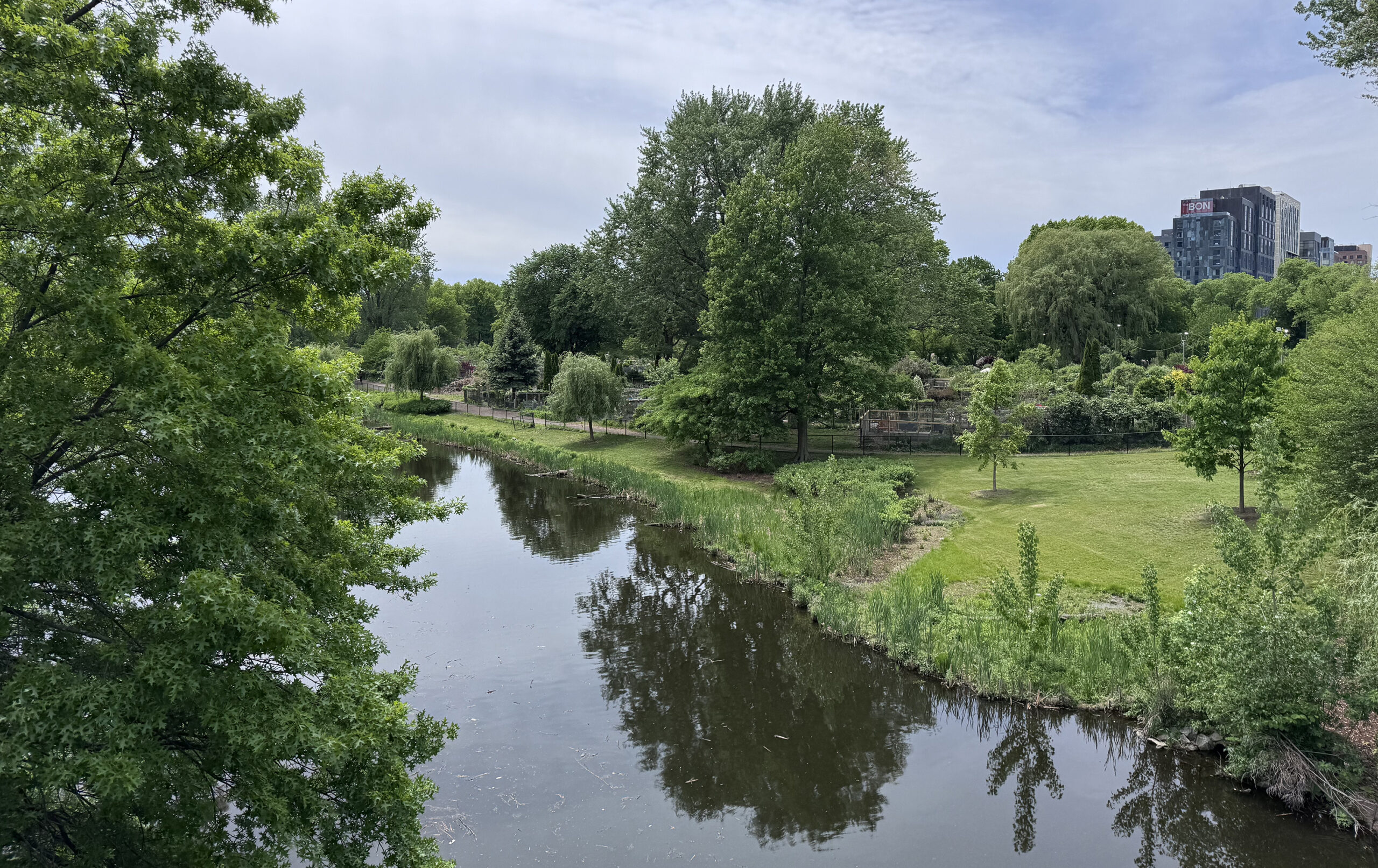
Working around the planning errors of past generations, the Conservancy has done a miraculous job reclaiming what they can. For years, for instance, the link between Back Bay Fens and Riverway had been buried beneath a parking lot for the Sears Roebuck company. When that business closed, the waterway was uncovered. While the salt marsh is long gone, the Back Bay Fens now feels to be a continuation of river that flow through the next three parks in the Emerald Necklace chain.
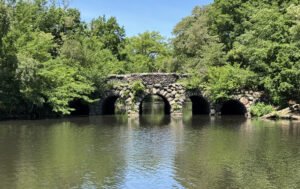
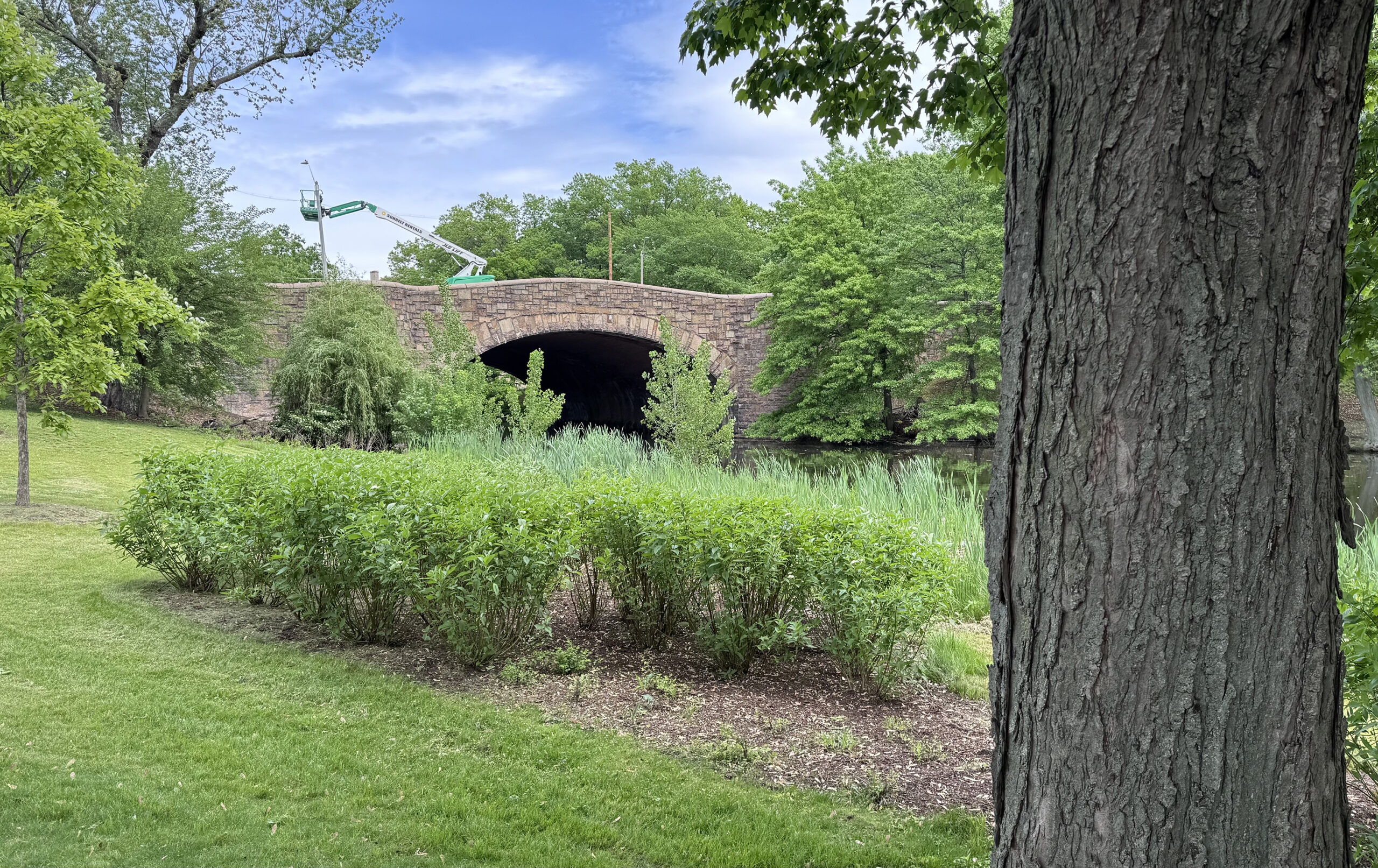
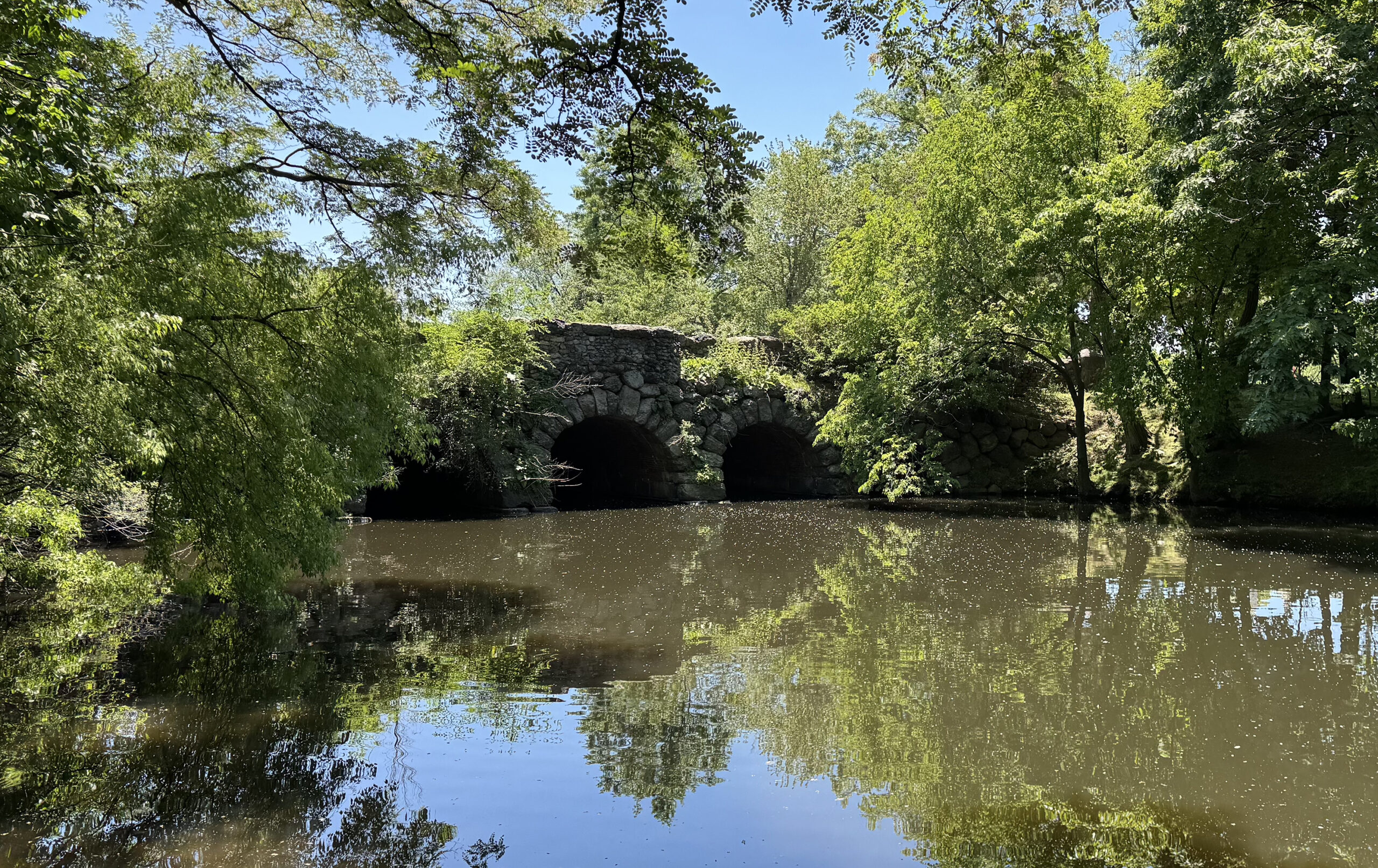
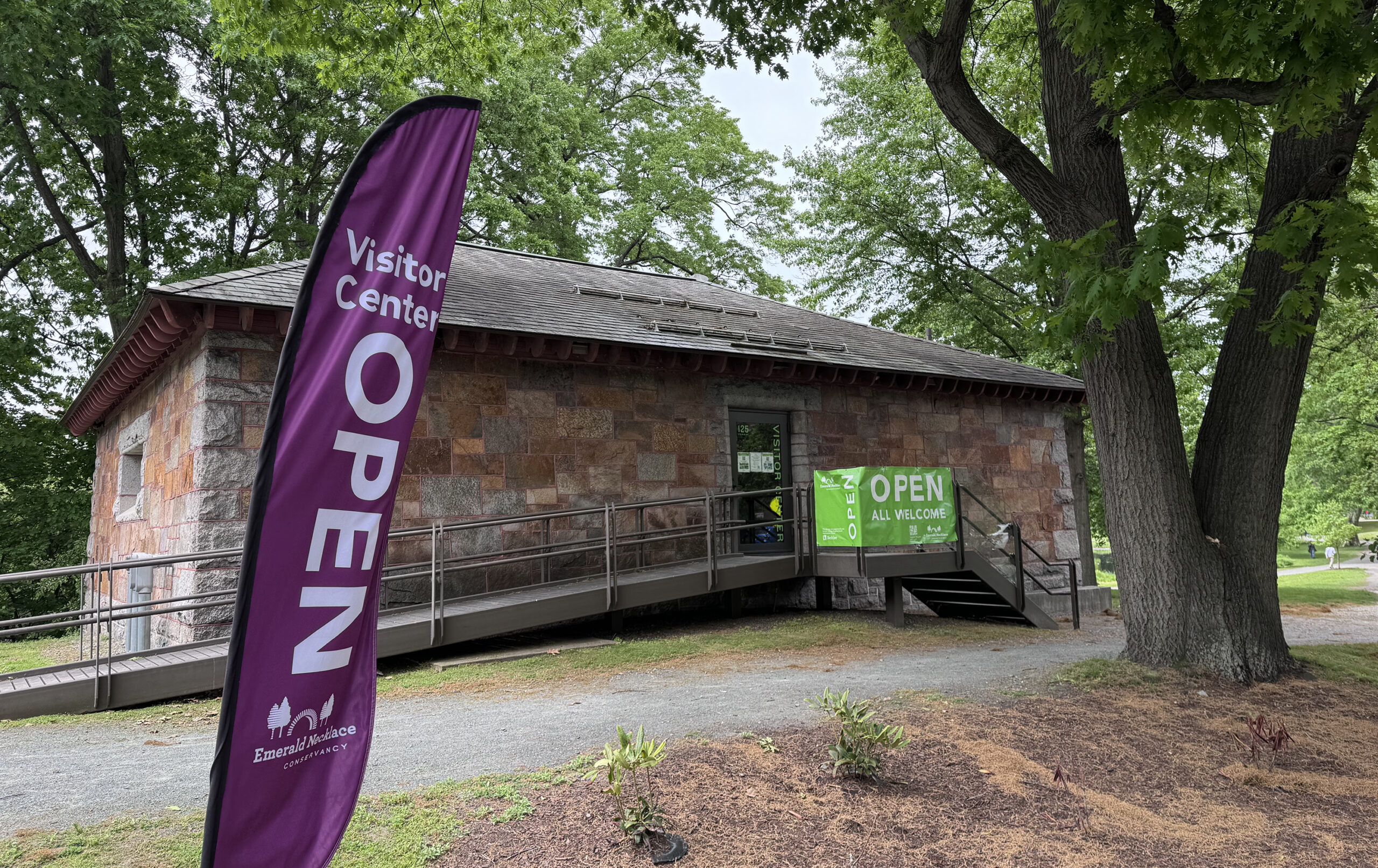
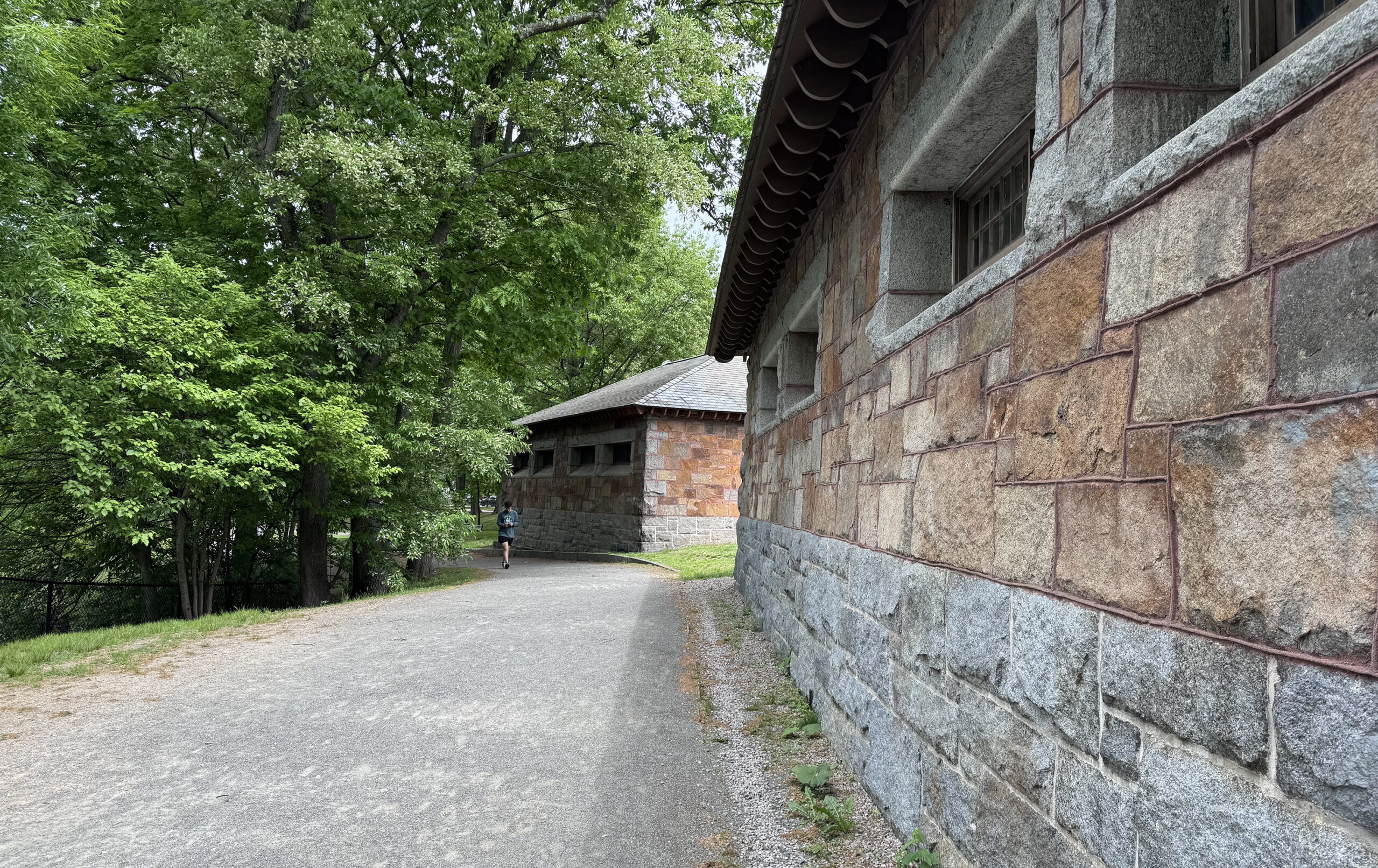
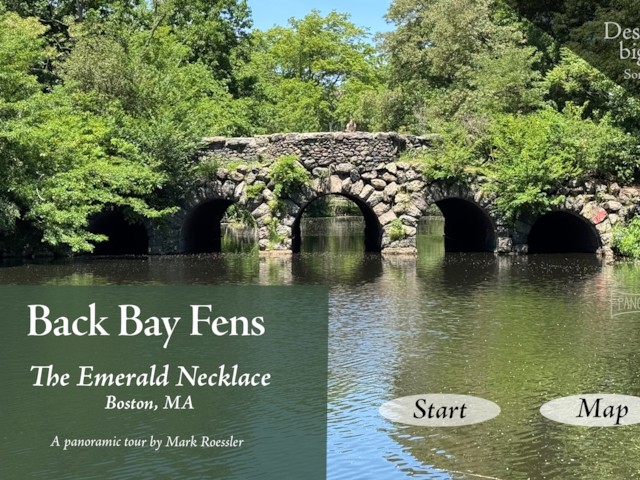
In addition to many other improvement and advocacy efforts across the Necklace, the Conservancy has been working to make the link to the river and the Commonwealth Avenue Mall from the Back Bay Fens more accessible. What’s left of the original park features are handsomely maintained and well framed by plantings. The Conservancy’s visitor center is housed in one of the Stony Brook Gatehouses designed by H.H. Richardson and built to house some of the flood control engineering for Olmsted’s original plan. The Boylston and Agassiz bridges are still magnificent to look at and each still include perches ideal for surveying the birds, fish, and turtles in the Muddy River snaking below.
Frederick Law Olmsted moved his family and business to Brookline, MA in 1883. His home and office, Fairsted, was situated a 15 minute walk from the Emerald Necklace. After spending decades in the New York metropolitan area, he was all in on Boston and devoted the rest of his life to completing his greatest multi-park work—a system that wove naturally through its city, connecting historic landscapes with new, lush ones—all appearing as if it had been there forever.
Part of why he kept his distance initially from Boston as it planned its park system was Olmsted was not at first convinced the city was serious about building public parks. The success of any of his public park designs depended on generations of stalwart stewards to maintain them, nurture them, and defend them from private business intrusions. As a Massachusetts resident, I am tremendously grateful for the Emerald Necklace Conservancy taking on this role. I only wish they had partners in the city and state who understood the sanctity of public land and its importance in helping democracy thrive the same way the Conservancy does.
Related