For Immediate Release:
On October 27, 2025, Levellers Press published the new book by author Mark Roessler, Fairsted: Reflections on how Olmsted helped heal a broken democracy.
Readers can step inside Frederick Law Olmsted’s home and office in Brookline, MA; the place he called, “Fairsted.” The 156-page publication from Leveller’s Press features two essays on Olmsted and an in-depth, full-color panoramic tour of Fairsted’s office wing and grounds.
The essays offer a new telling of Olmsted’s origin story and describe how his parks were designed to heal a deeply divided nation. “How Olmsted Parks Work” examines the components—philosophical and physical—that make his parks democratic. “Olmsted’s Lost Years” tells of how, despite its success, Central Park challenged and eventually broke Olmsted. Five years in, he quit the park, vowing never to return. After contributing to the Civil War effort, he and his family headed west to manage a gold mine. In the actual wilderness, inspiration eventually struck again while camping in California. The same remedy he later prescribed the nation—spending time surrounded by natural beauty—also healed him. He returned with a new vision for the importance of parks, and a successful career realizing that vision.
Written and researched over five years, the book quotes the letters and papers of Frederick Law Olmsted extensively and includes extracts from a little-known manuscript he was working on in California.
Olmsted moved into Fairsted with his family in 1883. Almost thirty years into his career, he was world famous and busier than he could handle alone. For nearly a century after that, Fairsted housed several different incarnations of the the landscape architecture firm and their staff, all with variations of Olmsted’s name. The teams assembled there, led by his sons, designed hundreds of more parks after Olmsted’s death. In 1980, the Brookline address became the Olmsted National Historic Site. The original workspaces and drafting rooms have been kept as they were in their heyday, and the lush grounds are still maintained to Olmsted’s specifications.
More than just a home and office, though, Fairsted acted as a kind of living showroom for the principles he championed. Social, political, and environmental, his broad view of the world and how it could be more democratic worked equally well for his parks, and the many other properties he shaped. These included college campuses (Smith and Mount Holyoke were both his), private estates, government grounds, and municipal work (like a design approach to Amherst’s town common). In addition to connecting people to nature, he wanted his work to connect us to each other. Fairsted magnificently reflects the quiet, silvan grandeur to which he aspired.
Ultimately, Frederick Law Olmsted designed more than 40 parks across the eastern part of the Untied States. The goal of the author of Fairsted is to visit and document all of these parks, turning his photographs into online tours and books. Fairsted is intended as the first in the series, offering a look where many of the future parks were conceived.
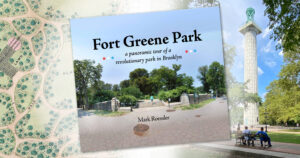
In 2019, Mark Roessler’s previous book, World’s End, was also published by Leveller’s Press in Amherst, MA. That book offers a panoramic tour of the Olmsted-designed location in Hingham, MA. Designed originally as a housing development, nothing was ever built on the property. Today, it is maintained by the Trustees of Reservations and the nearby community today treat it as a wondrous park on the water. A future book on Brooklyn’s Fort Greene Park is currently in production.
Mark Roessler was a former managing editor of the Valley Advocate newsweekly and has lived and worked in New England his entire adult career. He lives in a red bungalow in Western Massachusetts with his artist wife, scholar son, and retired circus dog who rules them all.
Fairsted, reflections on how Olmsted helped heal a fractured democracy
$35.00
8” x 9.5”
156 pages, softcover
Hundreds of photos in full color
Read my interview with the Olmsted Network!
Related